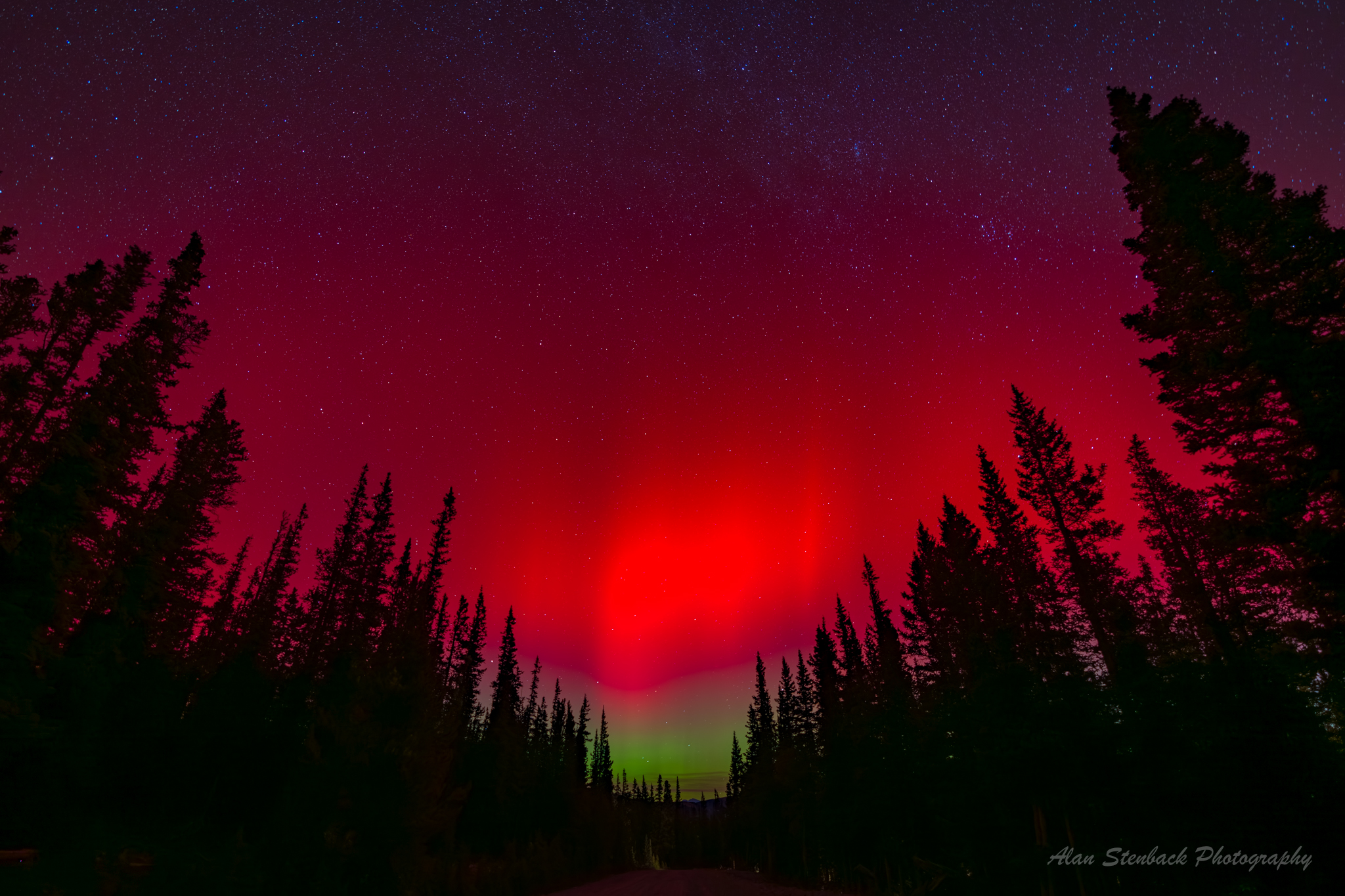
Seeing and photographing the aurora from home in Colorado still feels a little surreal.
Twice recently, strong geomagnetic storms pushed the northern lights far enough south to become visible from high elevation here in the Rockies. Subtle at first to the naked eye, almost easy to dismiss. But once the camera started collecting light, the colors and structure told a different story.
Here I break down what caused these events, how I prepared, where to look, how I shot them and how I processed the image so you’re better prepared the next time the sky decides to surprise us.
What Causes the Aurora
Auroras are the result of geomagnetic storms, triggered when charged particles from the sun – often from solar flares or coronal mass ejections – collide with Earth’s magnetic field.
When these storms are strong enough, the auroral oval expands southward. Occasionally, far enough south that places like Colorado fall within reach.
You don’t need to be in Alaska or Iceland. You need strong solar activity, dark skies and timing.
How to Read the Aurora Forecast
Forecasting is everything. For both of these recent events, the signals were there well before darkness fell.
Here’s what I watch closely:
- KP Index – Generally KP 7+ for Colorado
- Bz Index – Sustained negative values are a good sign
- Solar wind speed and density – Higher values often correlate with stronger activity
- Timing windows – Activity often peaks late evening through early morning
I usually start watching forecasts two to three days out, then monitor conditions closely the afternoon and evening of a potential shoot.
Aurora Forecast Links I Use
- NOAA Space Weather Prediction Center: https://www.swpc.noaa.gov (KP forecasts, geomagnetic storm alerts, real-time solar wind)
- 3-Day Geomagnetic Forecast: https://www.swpc.noaa.gov/products/3-day-geomagnetic-forecast
- Real-Time Solar Wind Data: https://www.swpc.noaa.gov/products/real-time-solar-wind
- SpaceWeatherLive: https://www.spaceweatherlive.com (Easy visual tracking of KP, Bz, speed and density. Great in the field)
- University of Alaska Fairbanks Aurora Forecast: https://www.gi.alaska.edu/monitors/aurora-forecast (Helpful for seeing how far south the auroral oval is expanding)
Where to Look in the Sky
From Colorado:
- Start by looking north
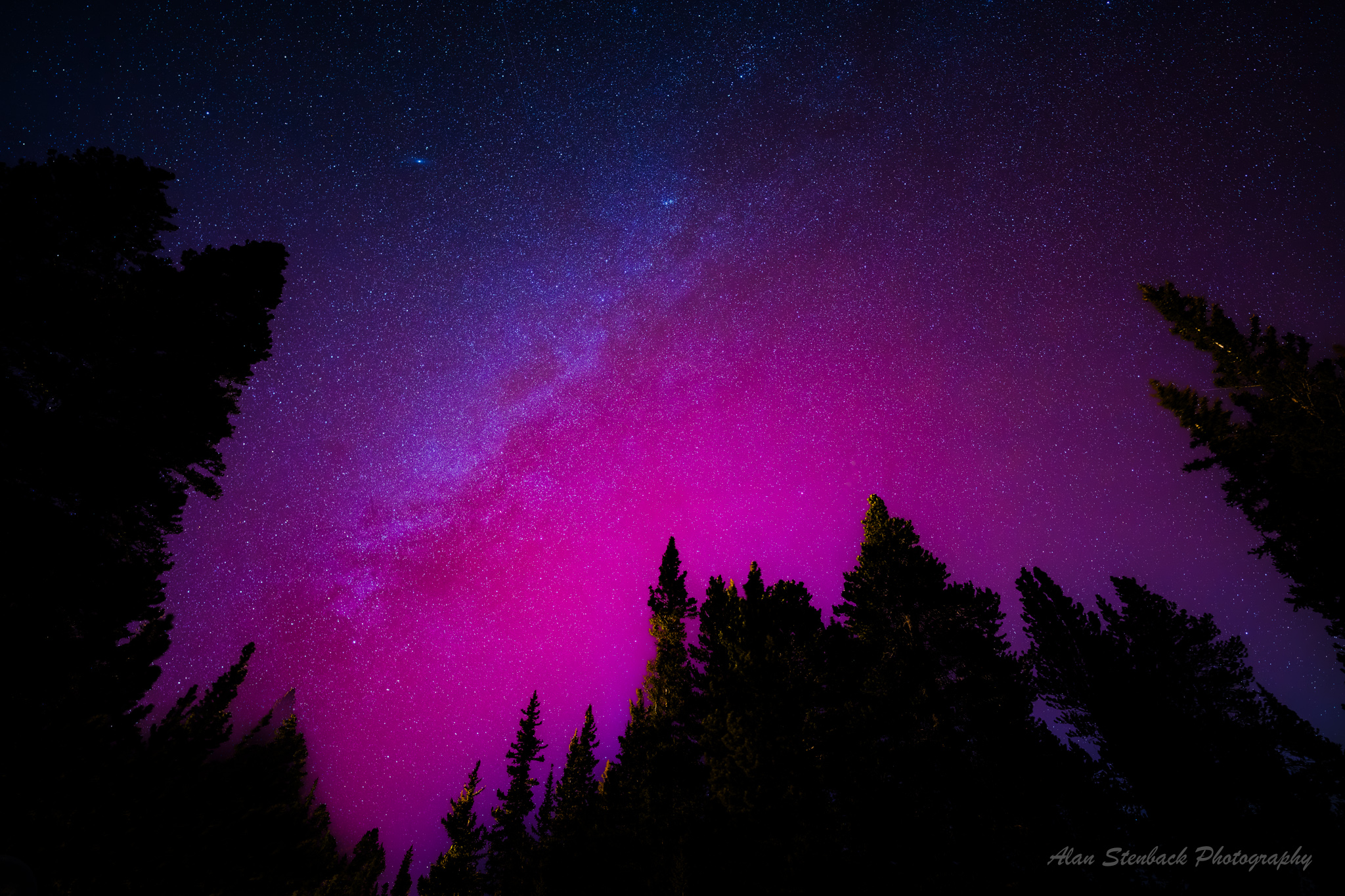
- Watch for faint vertical bands, subtle green or magenta tinting, or a soft glow near the horizon
- As activity increases, the aurora can climb higher and spread across the sky
High elevation, low light pollution and a clear northern horizon make a noticeable difference.
How I Shot the Aurora
This was my first real outing with a new wide-field setup and it delivered immediately.
My Setup
- Camera: Sony A7R V
- Lens: Sony 14mm f/1.8 GM
- Tripod with remote trigger
- No star tracking
Camera Settings
- Shutter: 15 seconds
- Aperture: f/1.8
- ISO: 1600
Additional field notes on settings:
- Manual focus, set carefully on a bright star and double-checked throughout the night
- Manual white balance (around 3800–4200K) to keep aurora color consistent
- Long exposure noise reduction turned off (dark frames captured separately)
- Histogram checked frequently to avoid clipping highlights as aurora brightness changed
The Sony 14mm f/1.8 GM produced outstanding results. Sharp stars, strong contrast and clean corners. For wide-field aurora work, this lens proved itself right away.
Light Frames & Dark Frames
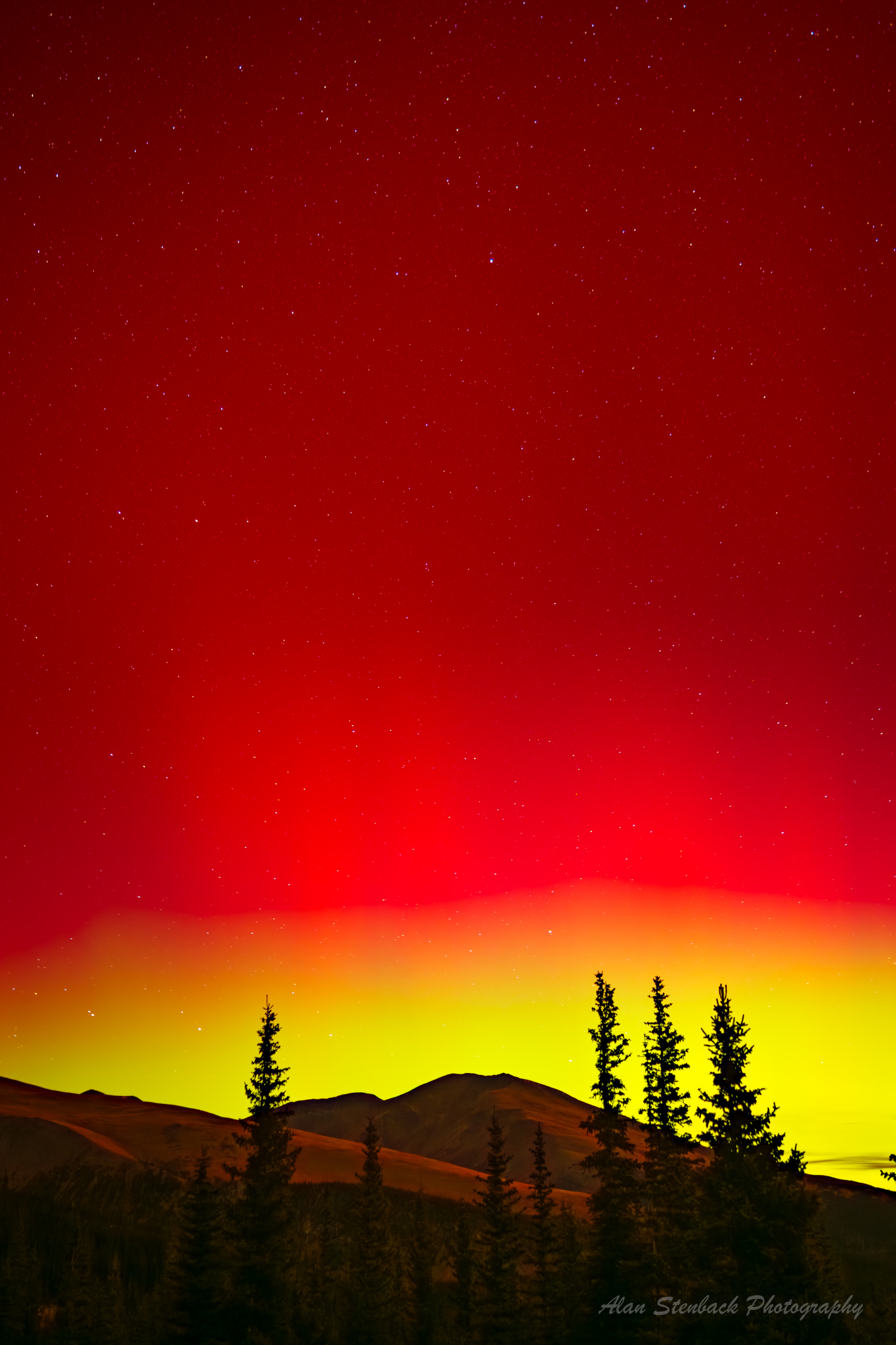
To improve image quality and reduce noise, I captured:
- Light frames – The actual aurora exposures
- Dark frames – Same settings, lens cap on
Dark frames help remove hot pixels and sensor noise during stacking, especially when working with faint aurora and shadow detail.
I typically shoot dark frames immediately after the session, while the camera temperature is still similar to the light frames.
Post-Processing Workflow
Initial Lightroom Pass
- Import all files into Lightroom
- Make basic exposure and white balance adjustments only
- Avoid heavy noise reduction, sharpening, or contrast at this stage
Export for Stacking
- Export images as TIFF
- Keep light frames and dark frames clearly organized
Stack in Starry Landscape Stacker (SLS)
At a high level:
- Load light frames
- Add dark frames
- Let SLS align and stack
- Export the stacked image
Stacking significantly reduces noise while preserving faint aurora detail that can be lost with aggressive noise reduction alone.
Final Edits in Lightroom
This is where the image comes together:
- Contrast and tone curve
- Fine color balance
- Final noise cleanup
- Sharpening for output
Field Notes (From the Cold, Dark, Real World)
The aurora often starts subtle.
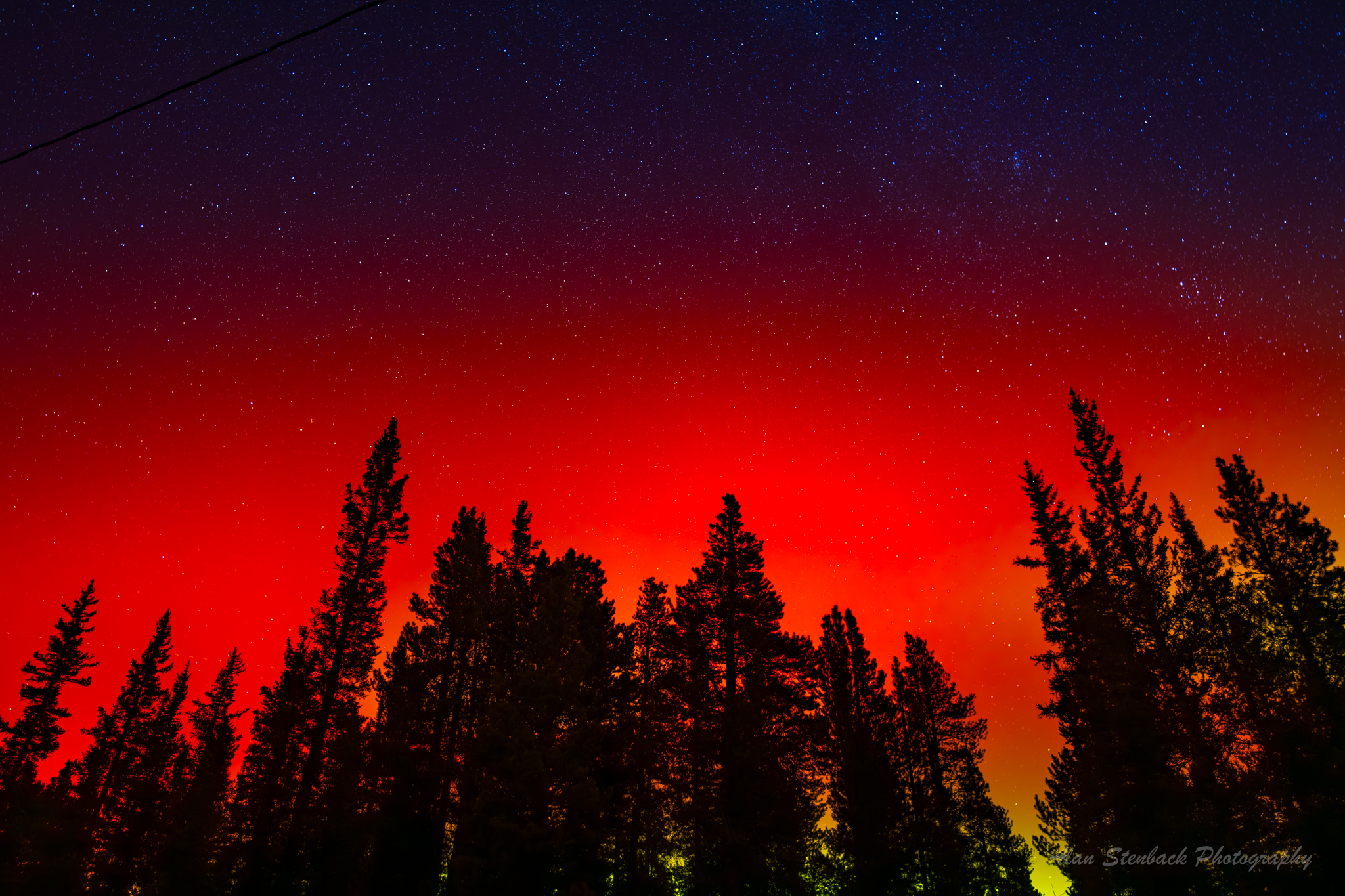
Both nights began with faint glow and texture to the north. Easy to second-guess. The camera confirmed what my eyes hesitated to believe. If something feels off in the sky, shoot it.
Keep shooting through quiet moments.
Auroral activity pulses. Some of the best frames came between stronger bursts, not during the obvious peaks.
Wide, fast glass beats tracking.
For aurora, I prioritize wide field of view, fast aperture and clean stars at 10–15 seconds. Tracking isn’t necessary here and can complicate things when the aurora itself is moving.
Watch the horizon.
Low-level aurora often sits near the horizon before rising. Subtle glow and reflection can be early signs of something building.
Dark frames are worth the extra time.
It’s tempting to pack up when activity fades. Taking dark frames while everything is still set up pays off later.
Dress warmer than you think.
Standing still behind a tripod gets cold fast. Gloves you can shoot in, extra layers and patience matter more than you expect.
Final Thoughts
Aurora photography is part preparation, part patience and part luck. But when everything aligns, it’s unforgettable.
If you live farther south than most aurora maps suggest, don’t write it off. Watch the forecasts, trust subtle signals and be ready to head out when conditions spike.
Sometimes the sky whispers before it speaks. And the camera often hears it first. Aurora can be far stronger on camera than to the eye, especially early in an event. Subtle glow or texture is often enough reason to head out.