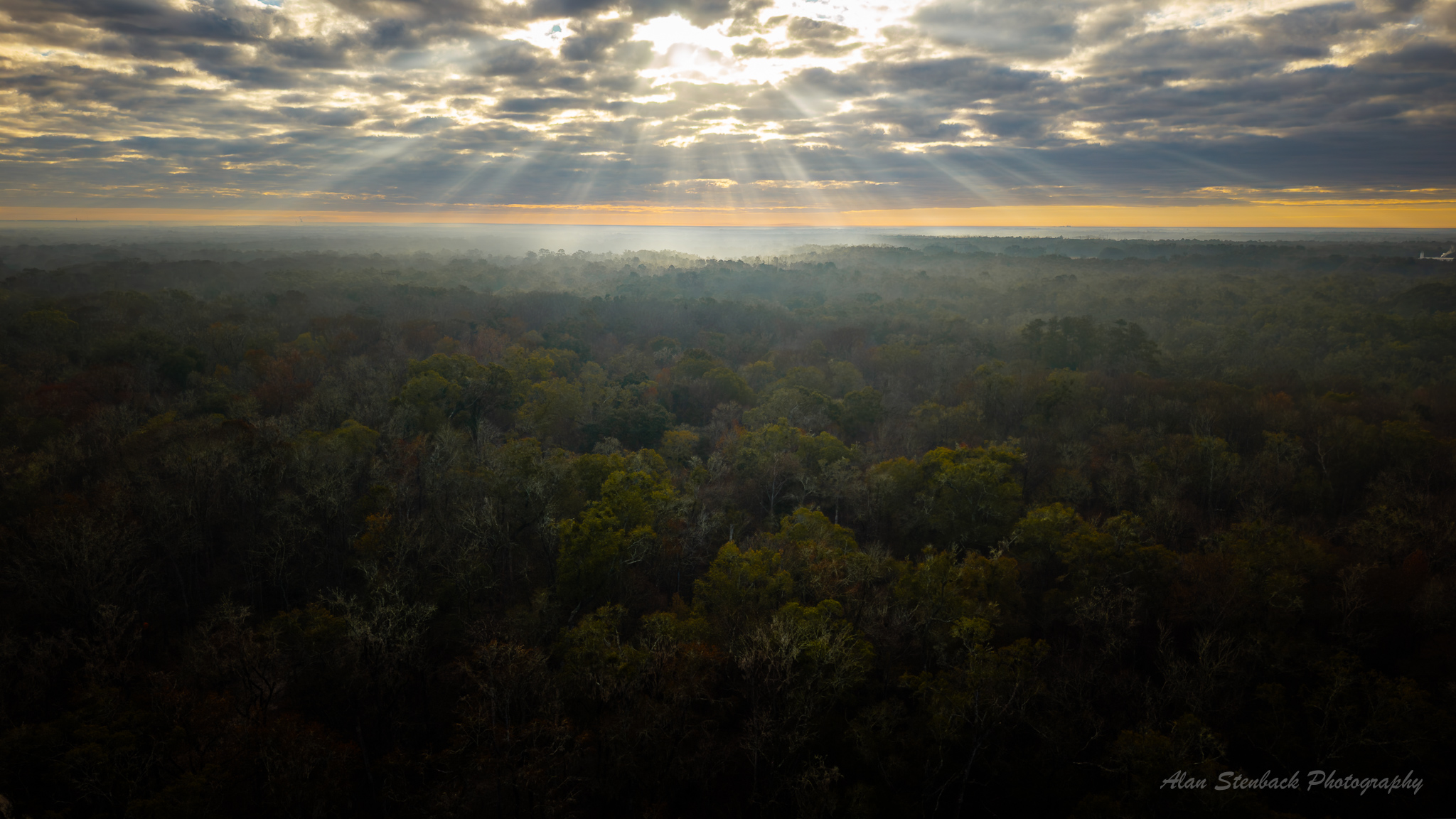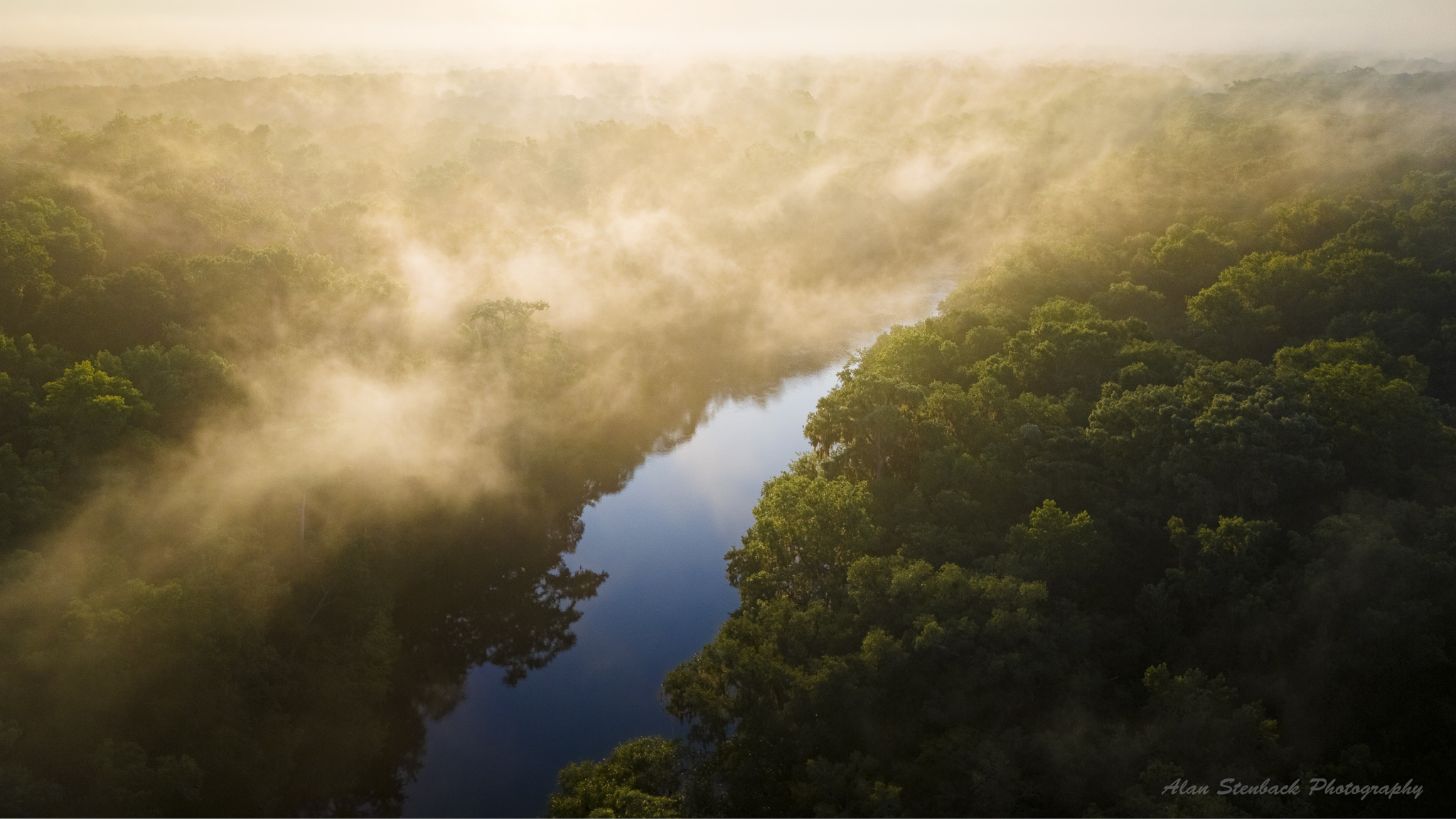
Each winter, when harsher winter conditions settle into the Rockies, or our tolerance for them quietly dwindles, we start looking south. Twice in the past few years, that pull has brought us to Florida.
I spent a large part of my adult life in South Florida before relocating to Colorado. I thought I knew the state well. The Keys, Everglades, Treasure Coast, Orlando, Tampa Bay. I was wrong.
Recent travels brought us through Gainesville, a part of the state I had largely overlooked. Home to an extraordinary network of crystal-clear freshwater springs that feel worlds away from the Florida most people imagine.
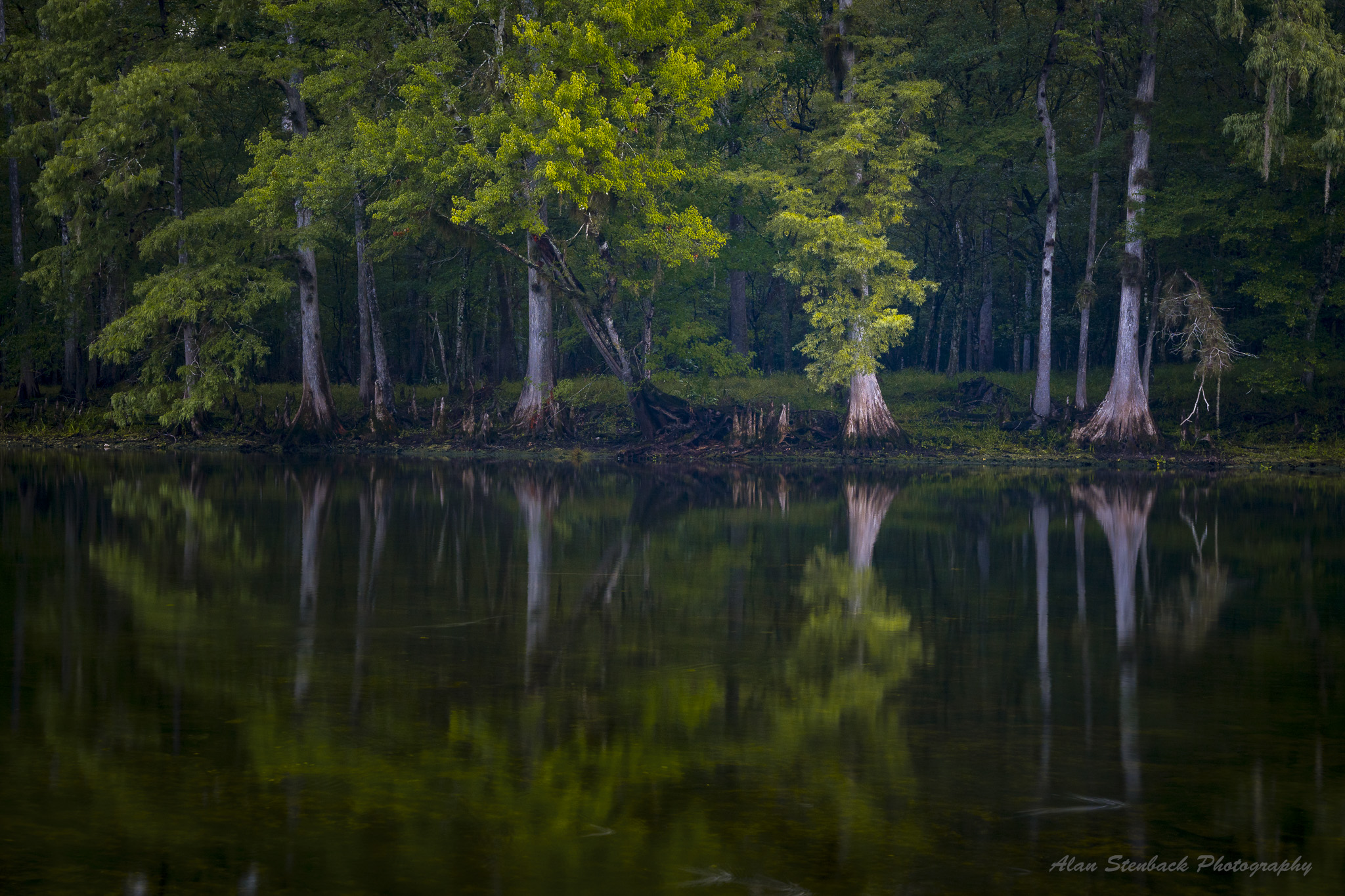
Florida’s spring ecosystem is ancient and fragile. Fed by the Floridan Aquifer, one of the largest freshwater aquifers in the world, these springs are replenished by rainfall that slowly filters through layers of sand and porous limestone over hundreds to thousands of years. The process produces remarkably clear, constant-temperature water, creating stable conditions that support the rich web of life found in and around Florida’s springs.
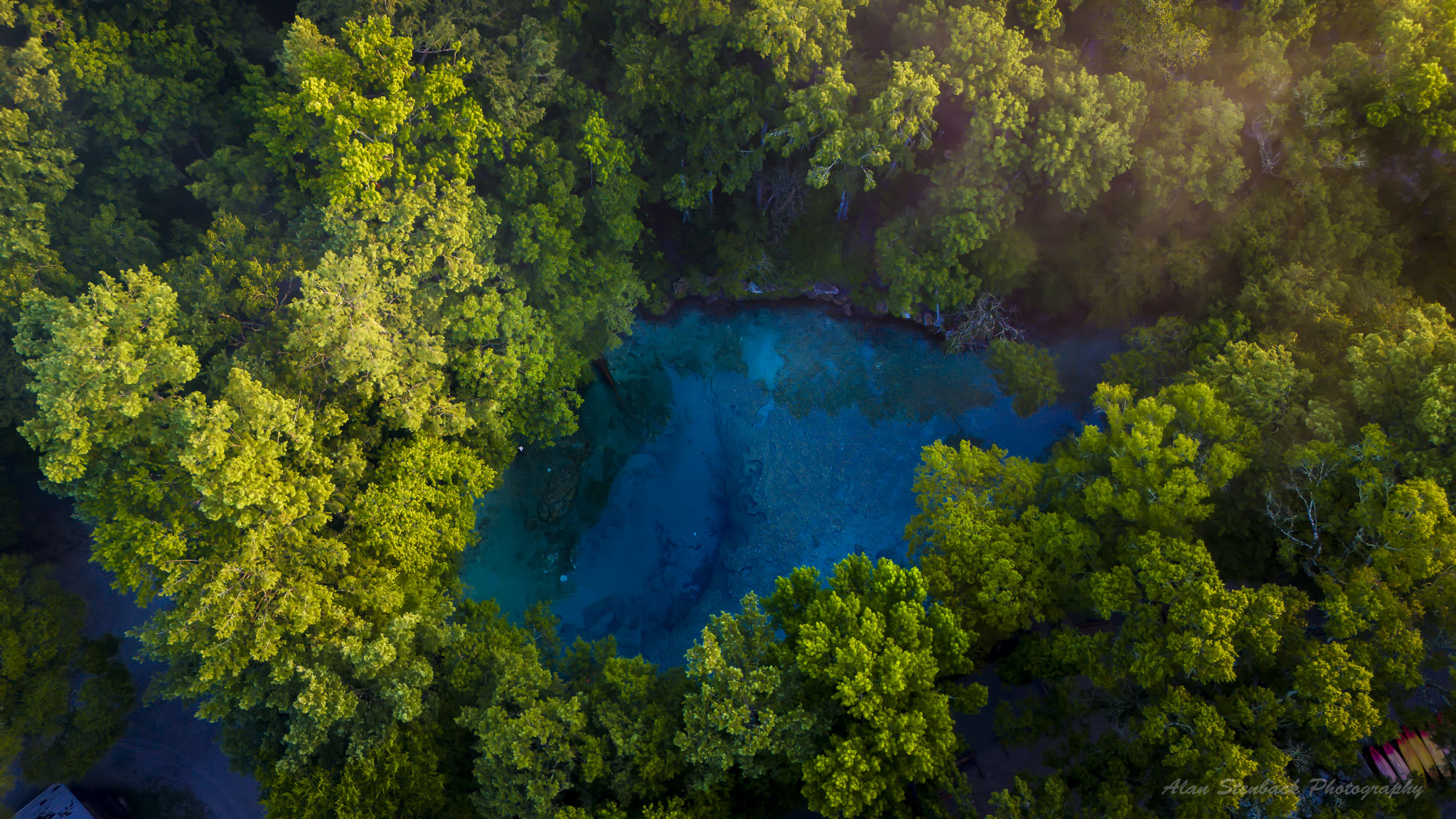
One place, recommended by friends, has quickly became a favorite: Ginnie Springs. Set along the Santa Fe River, the springs sit at the intersection of multiple ecosystems. Crystal blue water spills into tannin-stained river channels, bordered by swampy lowlands, cypress knees and dense canopy.
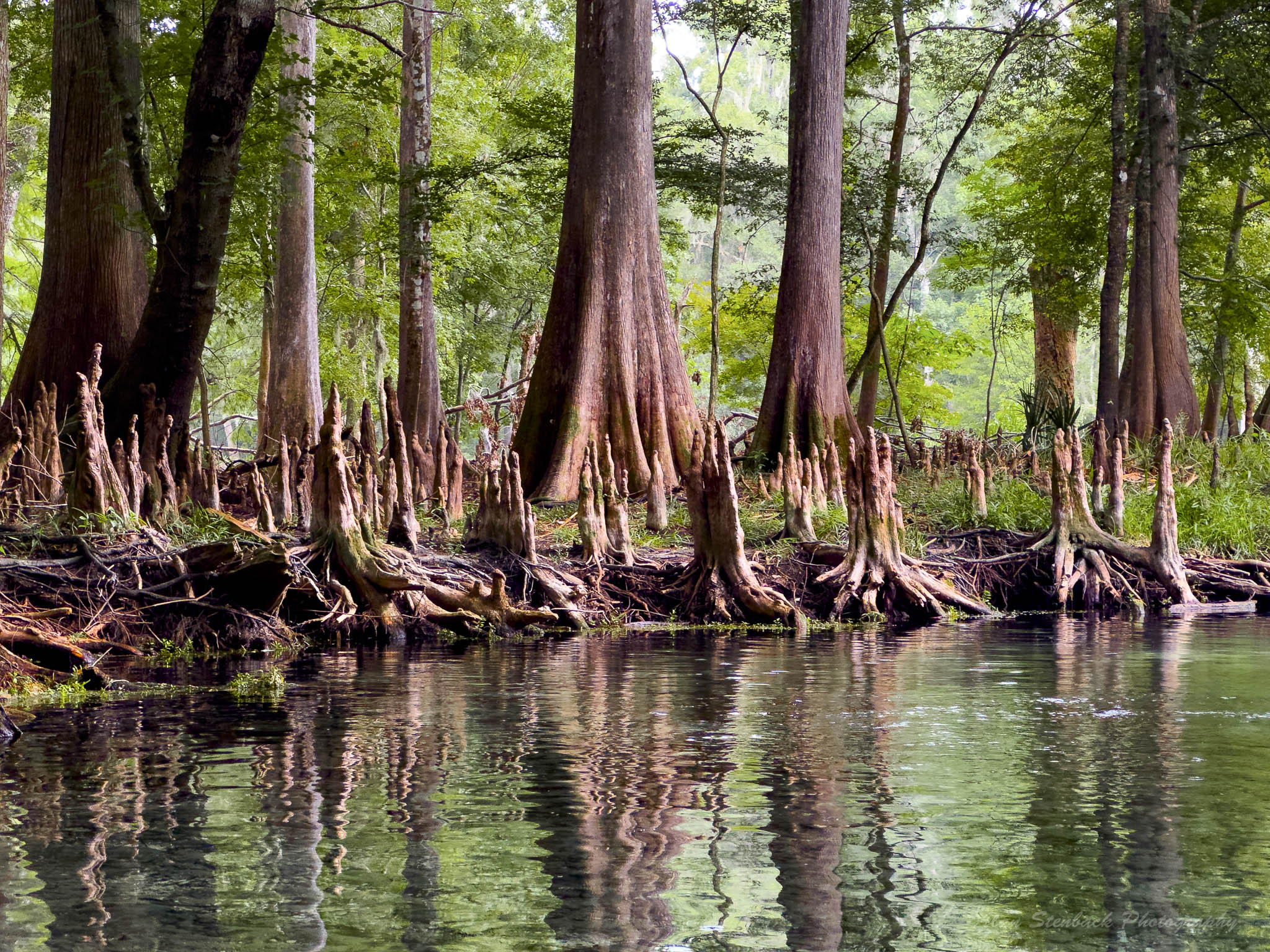
Camping here is immersive. Nights are quiet except for wind through the trees and the distant movement of water. Mornings arrive slowly, often wrapped in fog drifting just above the river’s surface.
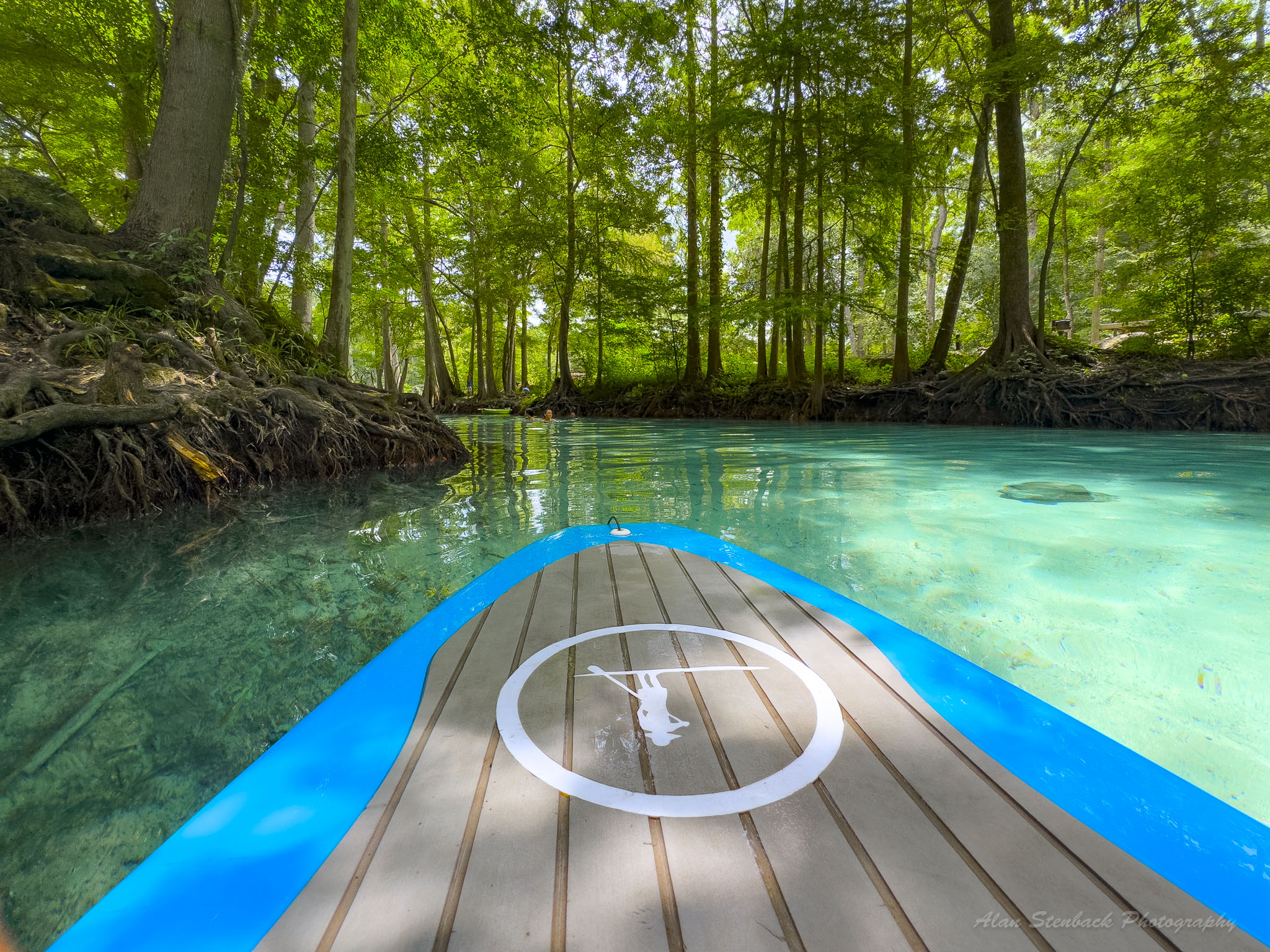
Paddle-boarding the Santa Fe is a lesson in contrast. Clear springs give way to dark, tea-colored water; open stretches narrow into shaded corridors. The river moves gently, inviting patience rather than urgency.
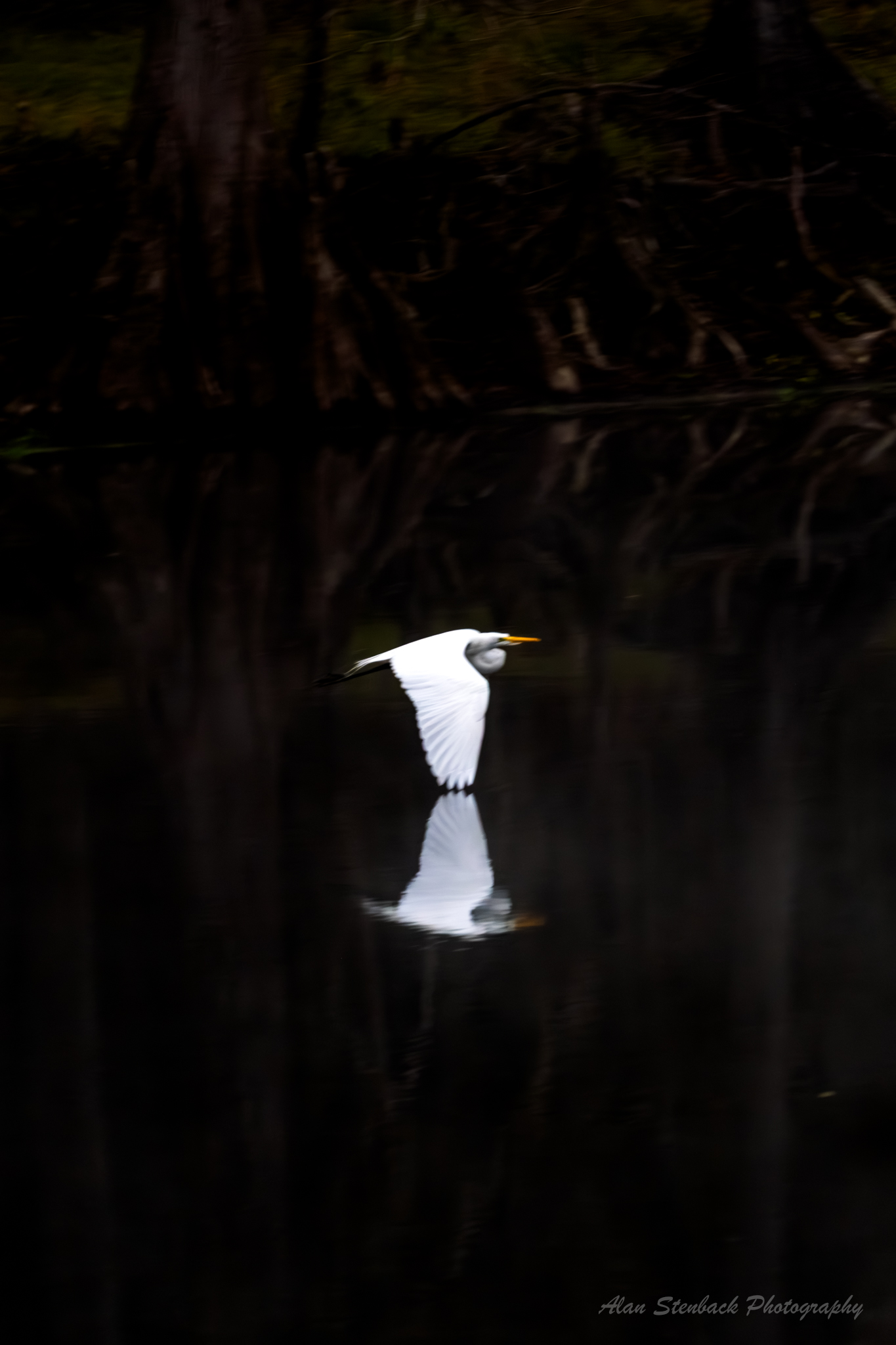
Foggy mornings on the river have become a favorite experience of mine. They bring with them plentiful opportunities to photograph wildlife woven naturally into the landscape: great egrets, blue and tricolored herons, white ibis and the occasional wood stork moving silently through the mist.
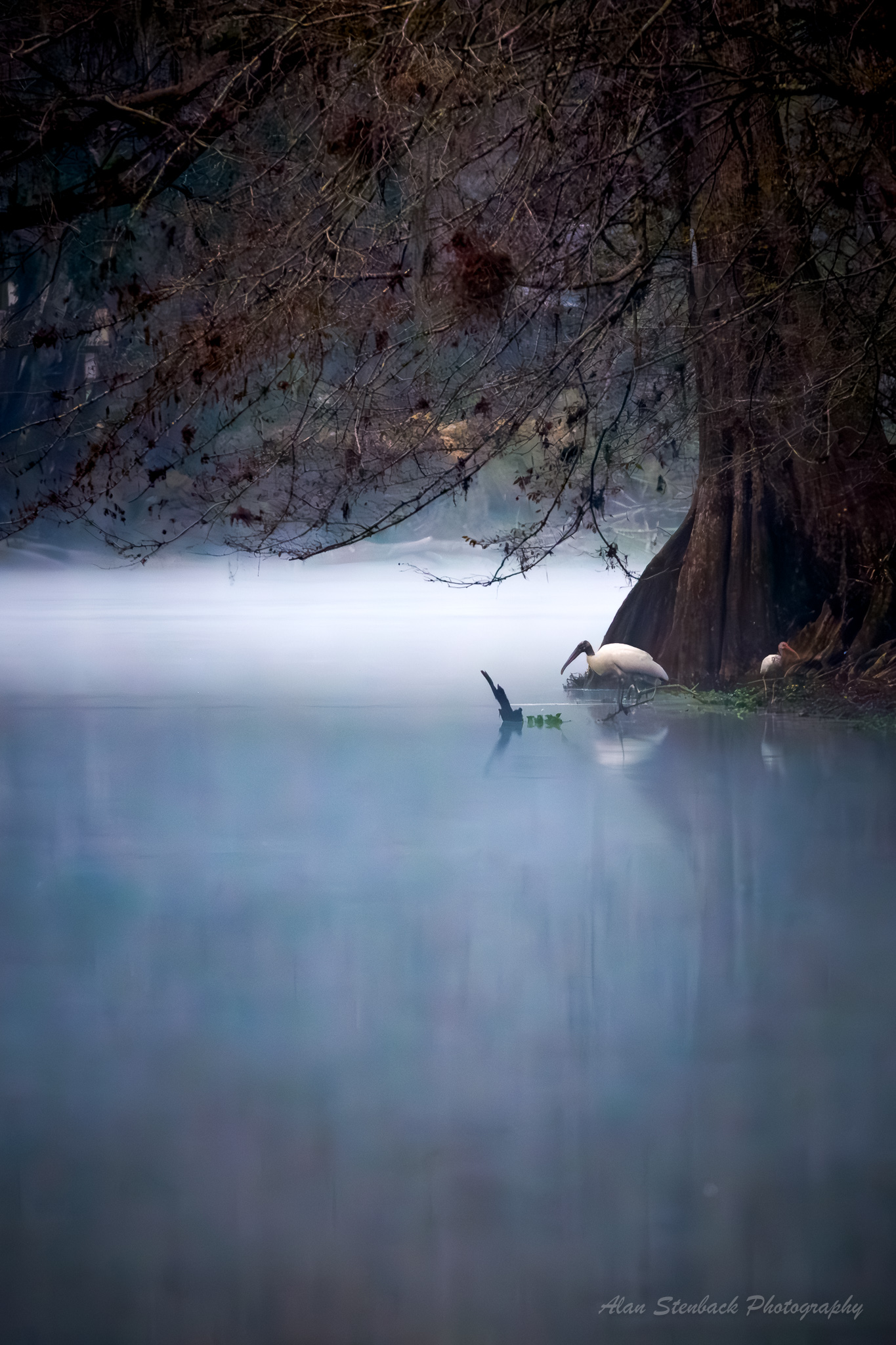
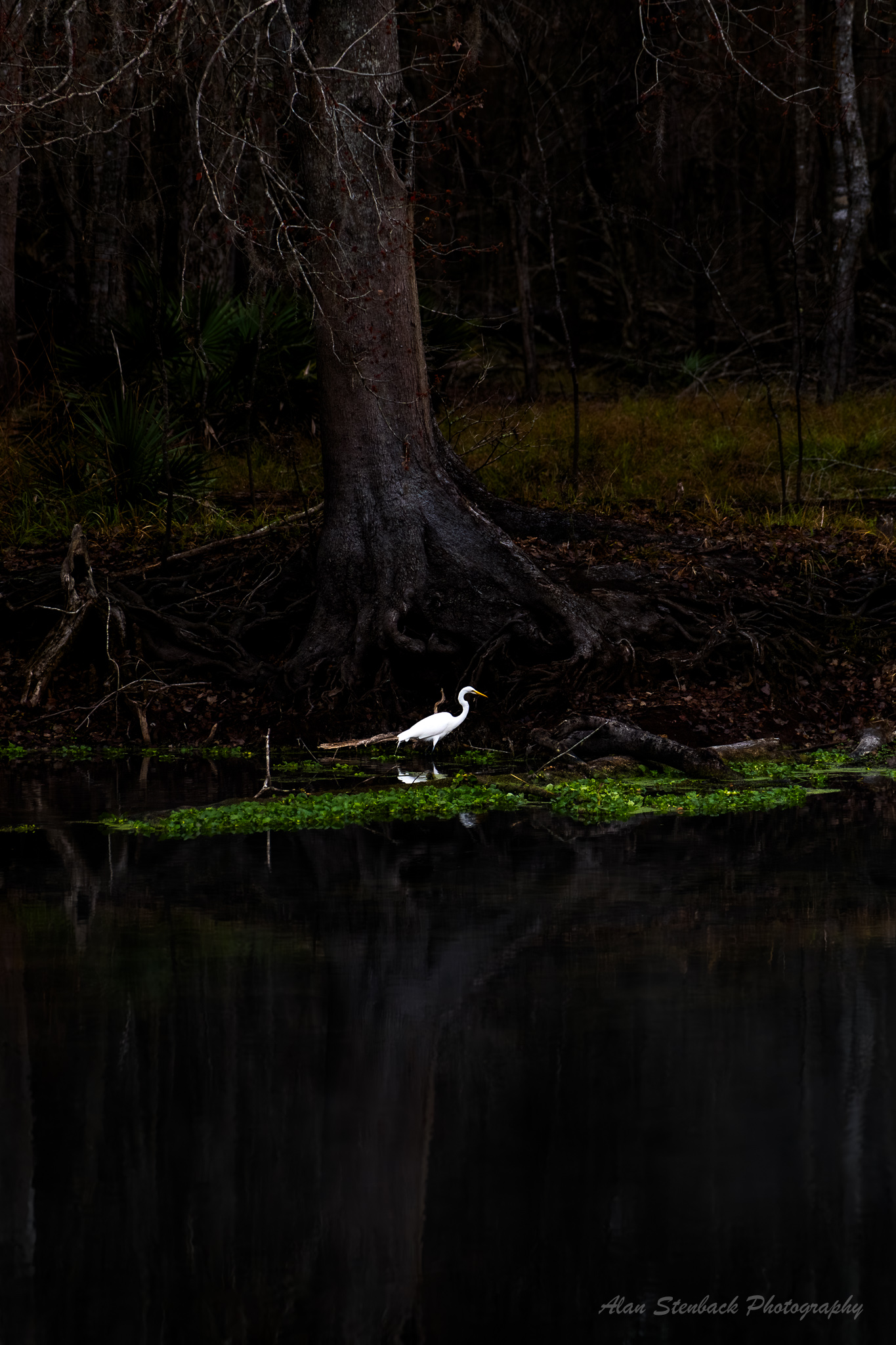
The trees here, bald cypress, tupelo and live oak, form layered canopies that soften light and frame movement. It’s a place that rewards stillness. If you wait long enough, something always happens.
Field Notes
- I don’t carry a dedicated wildlife lens. The “big lenses,” as I call them, are heavy, expensive and built for a different kind of focus
- Instead, I rely on a travel-friendly Sony 70–300mm and a shorter but sharper Tamron 35–150mm
- Paired with the Sony A7R V, that setup handles high ISO surprisingly well, especially for what I think of as “wildlife in the landscape” rather than tight portraiture
- High megapixels allow for generous cropping and modern noise reduction, whether native in Adobe Lightroom or via plugins, makes it possible to produce strong results even with modest glass
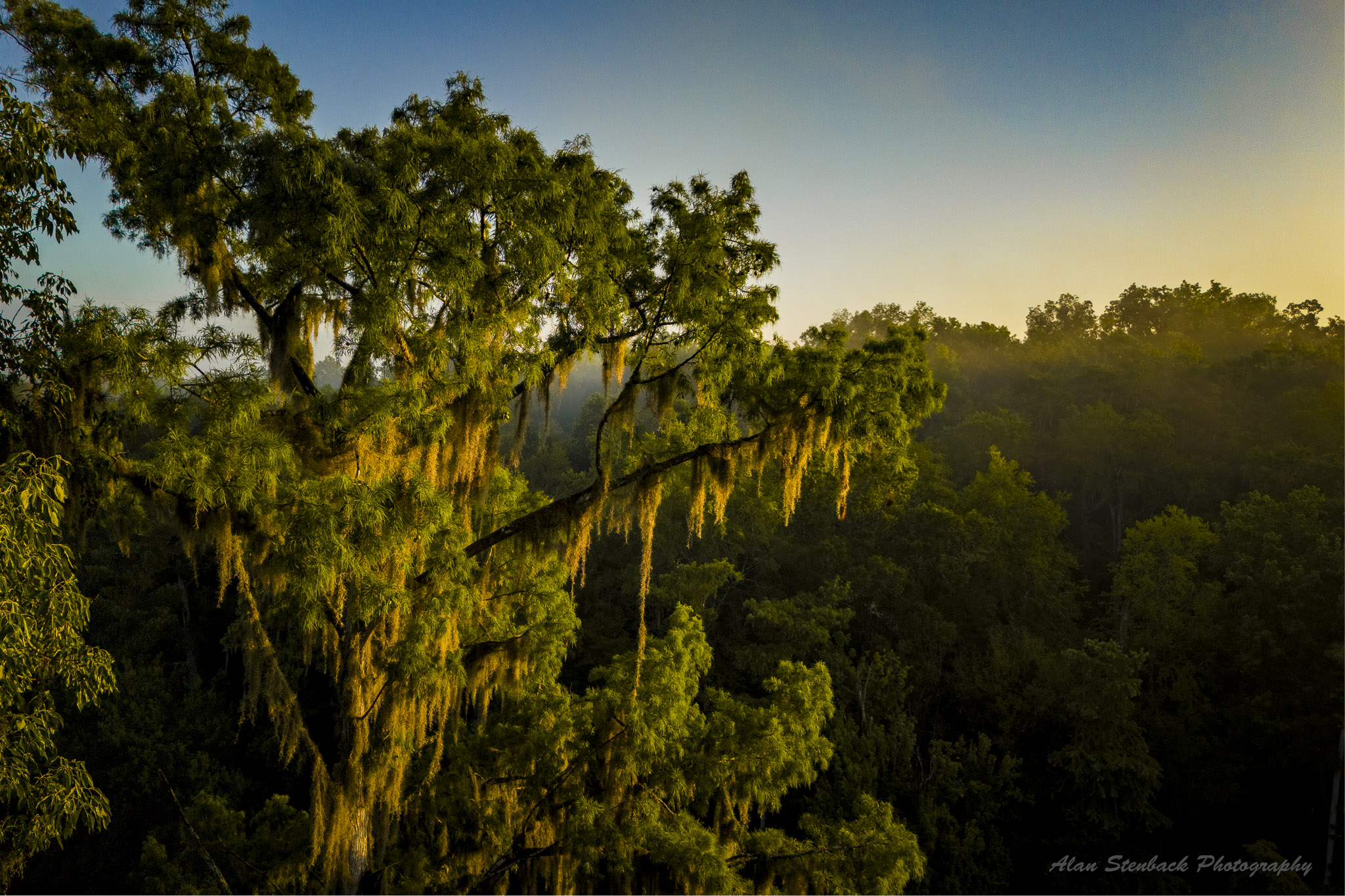
- Flying a drone above the canopy offers an entirely different perspective, revealing the layered structure of the forest, winding river corridors and fog patterns that are impossible to see from the water, while reinforcing just how intact and expansive this ecosystem still is
- As with most wildlife photography, patience remains the most important tool. Eventually, an egret hovering low over the river or a wood stork emerging from the mist rewards the wait