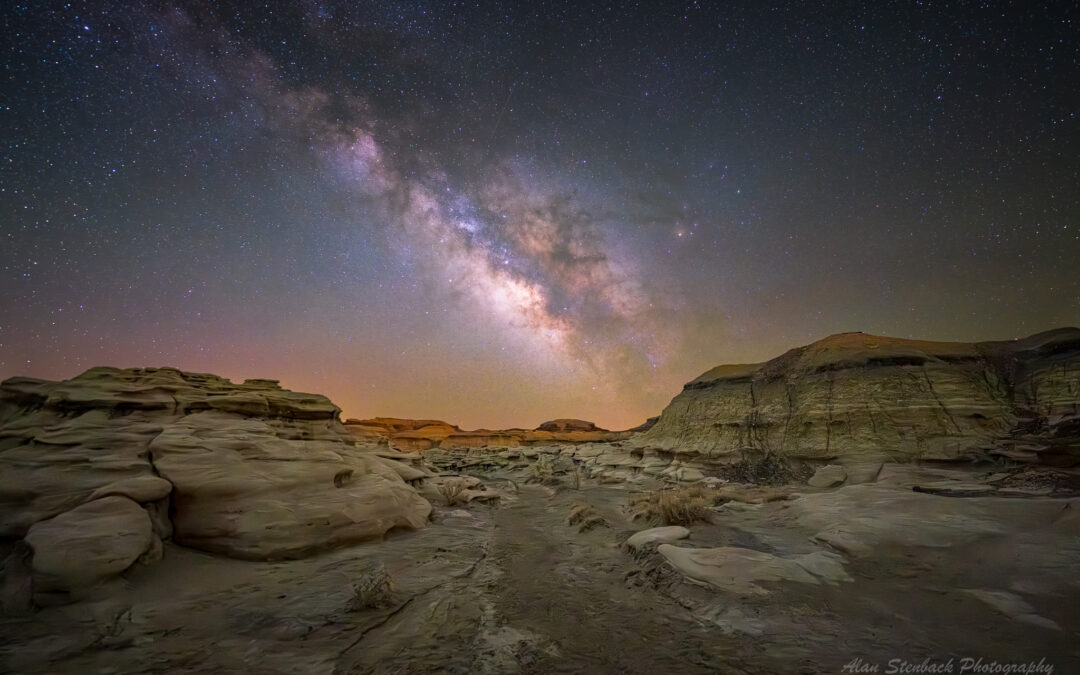
A first-hand experience photographing the Milky Way in Bisti/De-Na-Zin Wilderness, with practical tips for astrophotography, navigation and night sky shooting
Some places feel dramatic the moment you arrive. The Bisti Badlands feel something else entirely. It feels vast. Remote. Quiet in a way that makes you lower your voice without realizing it.
Getting to Bisti/De-Na-Zin Wilderness and Where to Stay
We approached from the west side, south of Farmington, which is the easiest access point for getting into the wilderness. The plan was simple: camp in the truck at the trailhead, wake up well before dawn and make the short hike out to nearby formations in time for Milky Way photography in Bisti Badlands.
Camping right at or near the trailhead is a common and practical option here, especially for photographers planning early morning or overnight night sky shoots.
Nearby, Bloomfield offers a slightly quieter, more laid-back feel compared to Farmington, though it comes with a bit more drive time to the west-side access. Farmington, on the other hand, is the more convenient hub. Larger, with more amenities and the most straightforward jumping-off point into Bisti.
What It Feels Like to Photograph Bisti Badlands at Night
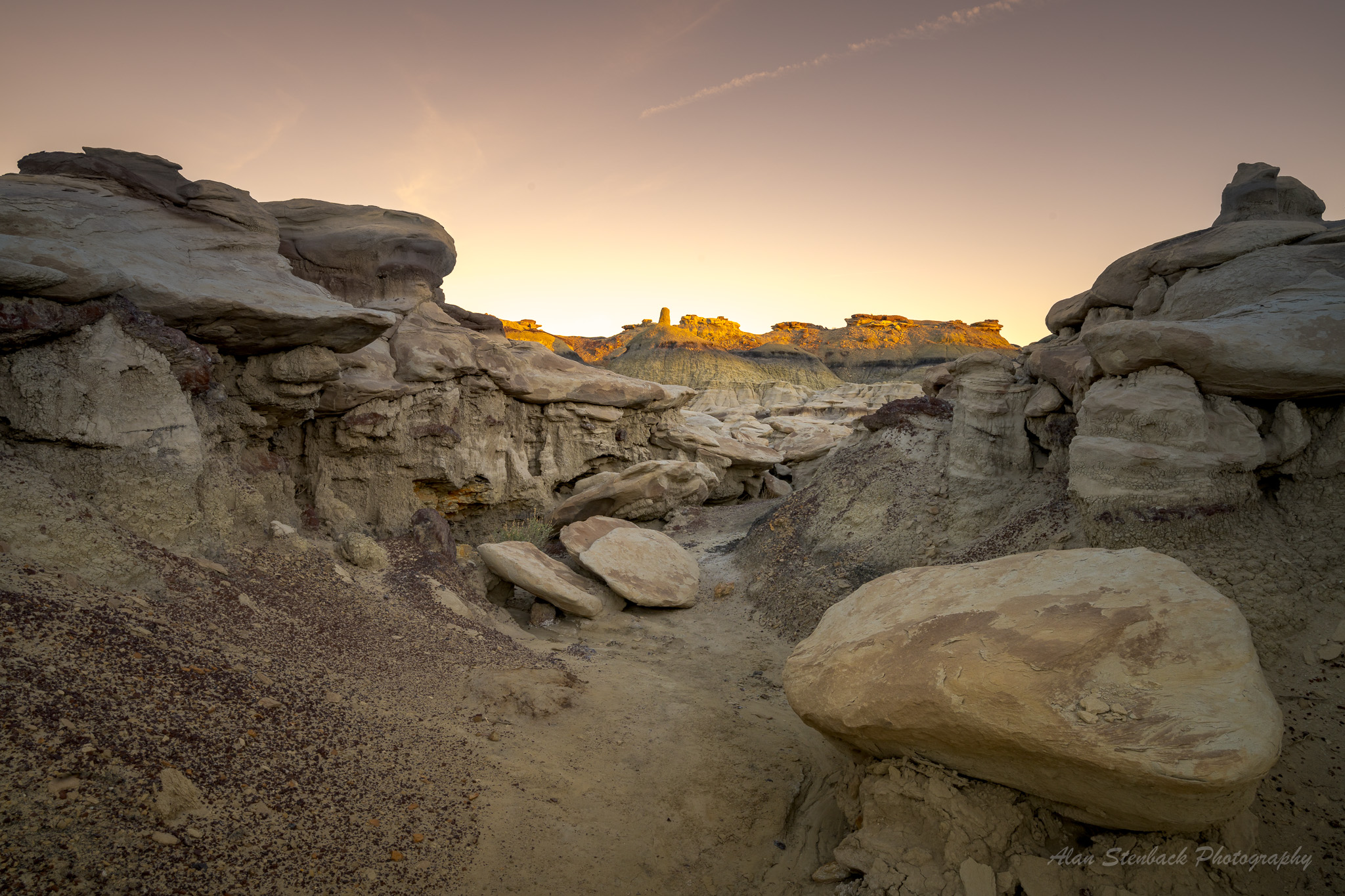
In practice, even “simple” in Bisti comes with a certain edge. There are no marked trails, very little cell service and once you leave the trailhead, the landscape starts to rearrange your sense of direction almost immediately. Routes here are informal and unmarked, and it’s easy to become disoriented. They’re not kidding.
From the truck, the hike to the nearest formations was only about fifteen minutes. In the dark, it felt much longer.
There’s something about walking into a pitch-black badlands landscape before dawn that stretches time. The silence feels bigger. The ground feels less certain. Every formation half-appears, then disappears again. And yet that’s also part of what makes Bisti Badlands so unforgettable for photographers. It doesn’t reveal itself all at once. You walk into it slowly.
Why Bisti/De-Na-Zin Wilderness Is One of the Best Places for Milky Way Photography
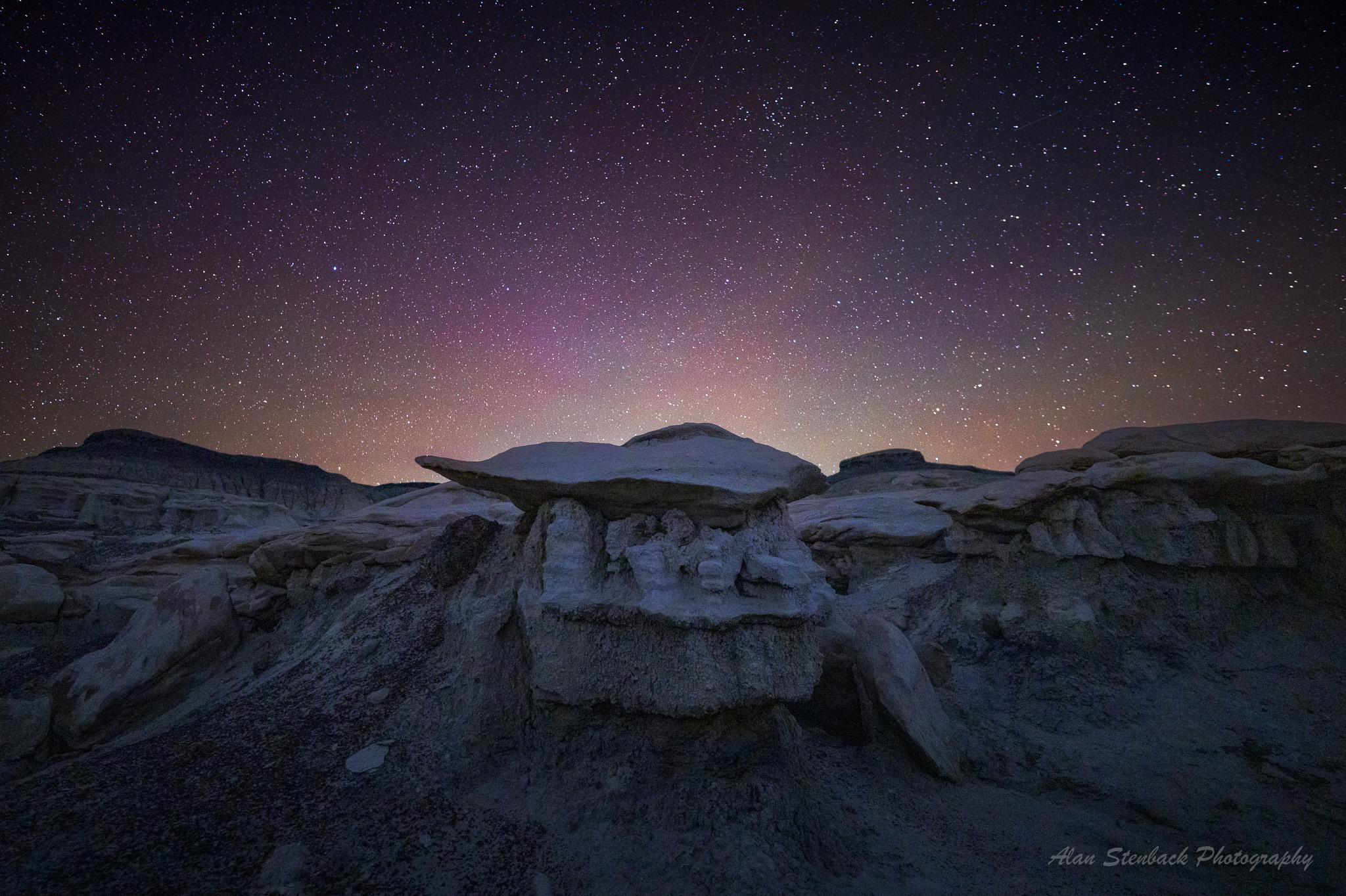
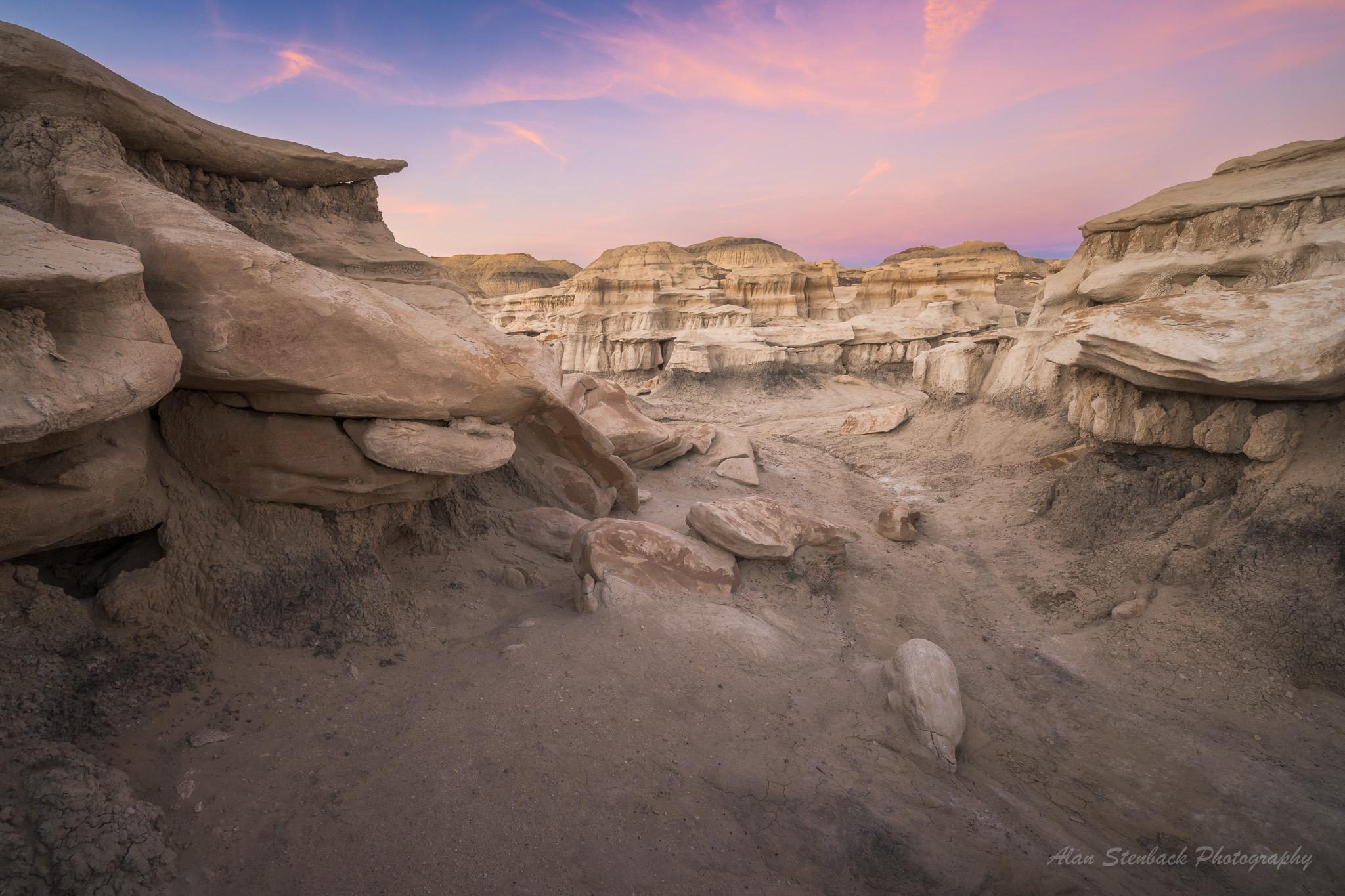
Once I reached the formations, the landscape started to open up in that strange, beautiful Bisti way. Shapes emerged. Shadows separated. Compositions seemed to appear in every direction. Hoodoos, ridges, textures, curves, negative space. It felt endless.
This is one of the best locations in New Mexico for creative desert photography and night sky compositions. You can work a single cluster of formations for far longer than planned, then turn around and realize there are ten more frames waiting behind you.
Even some of the more well-known formations, like the Egg Hatchery, King of Wings and City of Hoodoos, don’t feel overly defined or “destination-like” in the moment. They’re part of a broader landscape that invites exploration rather than checklist photography.
Best Time for Milky Way Photography in Bisti/De-Na-Zin Wilderness
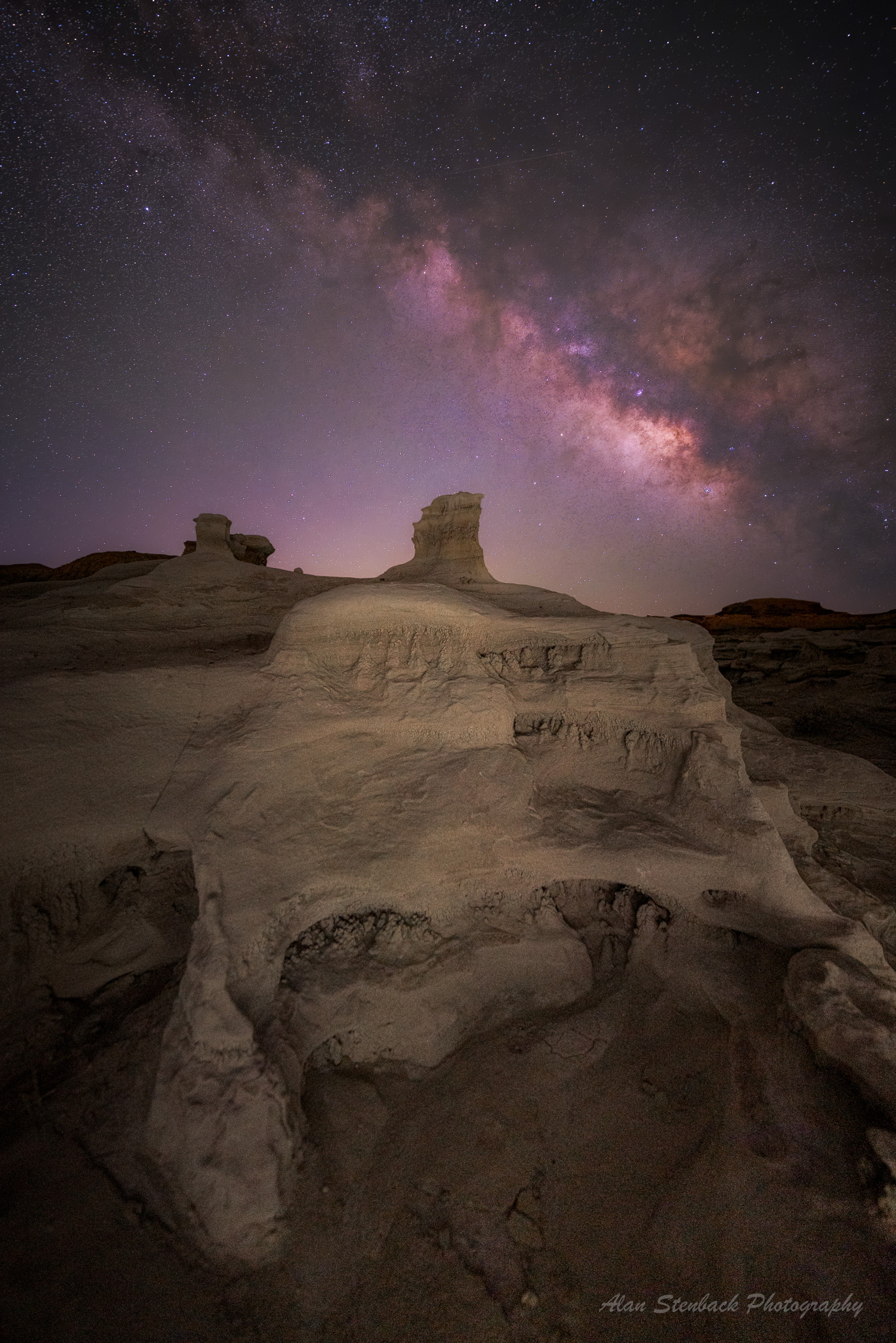
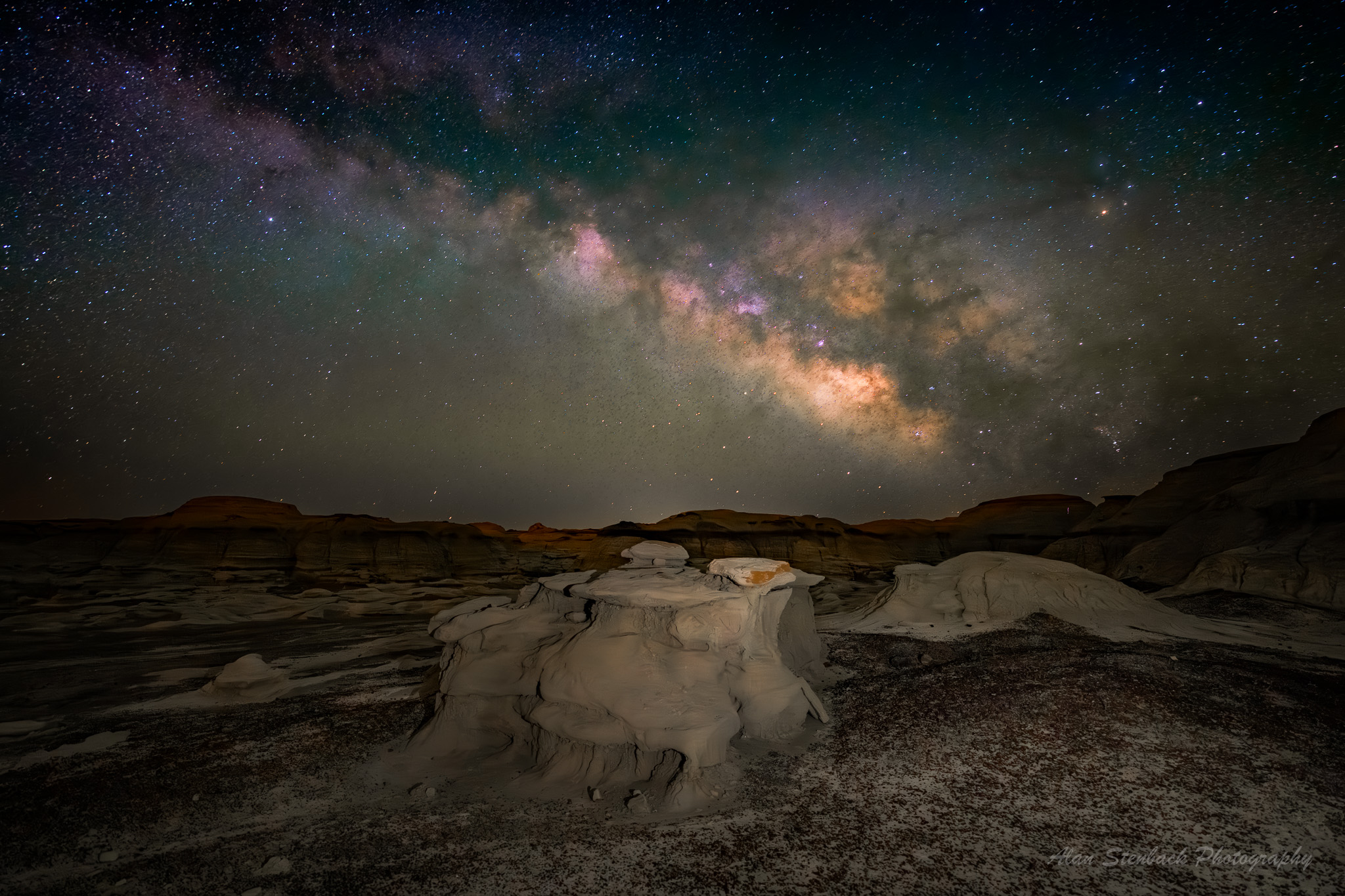
For night photographers, the timing felt especially good in that pre-dawn stretch between about 4:00 and 6:00 a.m. The sky still held the Milky Way, but the landscape had just enough shape and tonal separation to begin giving something back. I didn’t need much added illumination on the foregrounds. The desert was already doing more of the work than I expected.
That window worked particularly well because this was early March, very early in the Milky Way season, and the moon had already set. With truly dark skies and the galactic core rising just before dawn, that 4:00 to 6:00 a.m. stretch became the ideal overlap of sky and landscape for astrophotography. This timing is typical for early-season Milky Way photography in New Mexico, when the galactic core rises just before sunrise and requires precise planning around moon phases.
And then, just as I got into a real flow, sunrise started closing the window.
Exploring Beyond the West Side: Valley of Dreams and Alien Throne
The next day, we considered pushing farther to the east side toward Valley of Dreams and the Alien Throne. We got close, then made the call to back off. By that point it was clear we were underprepared for the hike in the midday heat and sun.
Bisti is not especially forgiving of poor timing. Distance, exposure, heat and route-finding matter here just as much as lenses and camera settings.
That’s part of the reason Bisti Badlands stands out as a serious location for landscape and night sky photographers. It isn’t just scenic. It asks more of you.
It asks you to arrive prepared. To know your route before you step away from the trailhead. To scout in daylight or twilight if you plan to shoot at night. To respect how easily the terrain can scramble orientation. To carry water, downloaded maps and realistic expectations.
It also rewards all of that.
Field Notes for Bisti Badlands Photography
Navigation
Don’t count on cell service. Download maps in advance and know your intended route, turnaround times and landmarks before you head out.
Trailheads and access
The west-side Bisti Trailhead is the easier jumping-off point for first visits. From Farmington, the route is south on NM-371 for about 36 miles, then east on County Road 7297 for about 2 miles, then left for 1 mile to the main parking area.
There are no marked trails
This matters more than it sounds like it should. Even nearby formations can feel farther away in darkness or low light.
Scout before you shoot at night
If possible, scout your compositions during the day or at twilight. This is especially important for Milky Way photography in Bisti, where navigation in the dark can be disorienting.
Expect endless compositions
This is not a one-shot location. Bisti Badlands photography rewards patience. Work your subjects slowly and explore variations.
Foreground exposure
I found that I didn’t need much additional foreground light. The subtle ambient desert tones were often enough for natural-looking night sky images.
For sharper blended results
For astrophotography, capture one frame for the sky and another for the foreground, then blend in Photoshop for edge-to-edge sharpness.
Why Bisti/De-Na-Zin Wilderness Stays With You as a Photographer
Bisti is the kind of place that makes you want more time immediately. Another dawn, another night, another chance to wander a little farther and see what appears next. It’s surreal without trying too hard. Beautiful without being obvious.
And for photographers willing to show up prepared, patient, and a little humble, it offers far more than a few famous formations. It offers that rare feeling that you’ve stepped briefly into a landscape that doesn’t operate by ordinary rules.
If this kind of landscape speaks to you, I’ll be returning to Bisti Badlands this September to host a small-group night sky photography workshop.
We’ll focus on Milky Way photography in Bisti. Navigating to key formations, working compositions in the field and dialing in your settings so you can confidently capture the night sky in one of New Mexico’s most unique landscapes.
Spots will be limited. Full details will be announced soon. If you’d like to join us, learn more and secure your spot for this Bisti Badlands night sky photography workshop here: