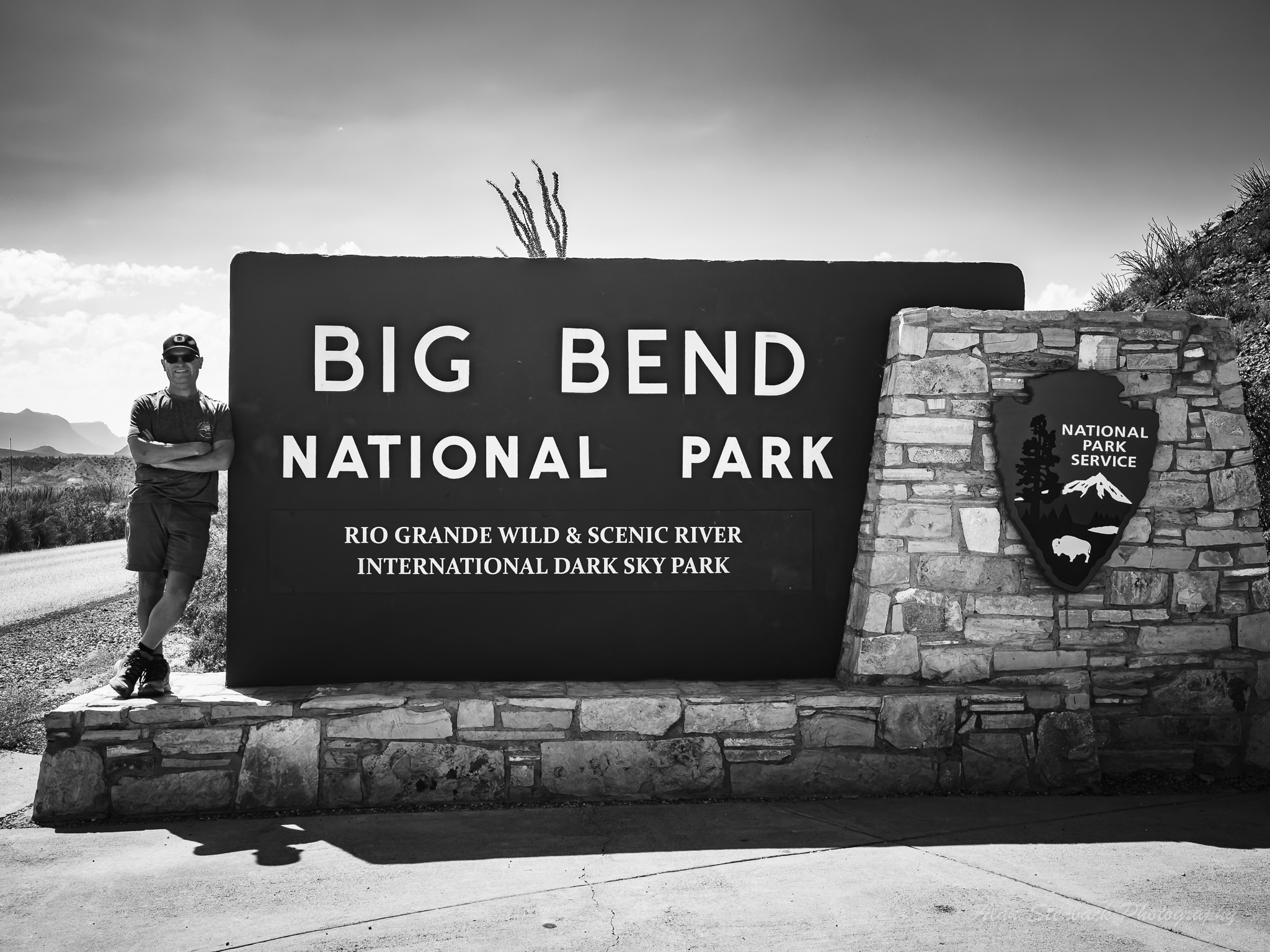
Some trips are planned months in advance. Others come together because an unexpected opportunity appears and you know immediately that you have to say yes.
Just as Gina and I were finishing the plans and webpage for our Big Bend Landscape & Astro Photography Workshop in November, we were invited to create new marketing photography for Space Cowboys in Terlingua.
We had a mostly “free” week. It would be a long drive from Colorado for a short stay, especially in the August heat, but we knew we could make it work.
So, without much hesitation, we said yes.
The trip would give me a chance to photograph a truly unique property beneath the dark skies of Far West Texas. From there, Gina and I could head into Big Bend National Park for a quick two-day, one-night scouting trip, an opportunity to spend more time in locations we were considering for November and create a few new photographs of our own.
It was a lot to fit into a handful of days, but we had this.
First Stop: Space Cowboys
Our first stop in the Big Bend area was Space Cowboys in Terlingua.
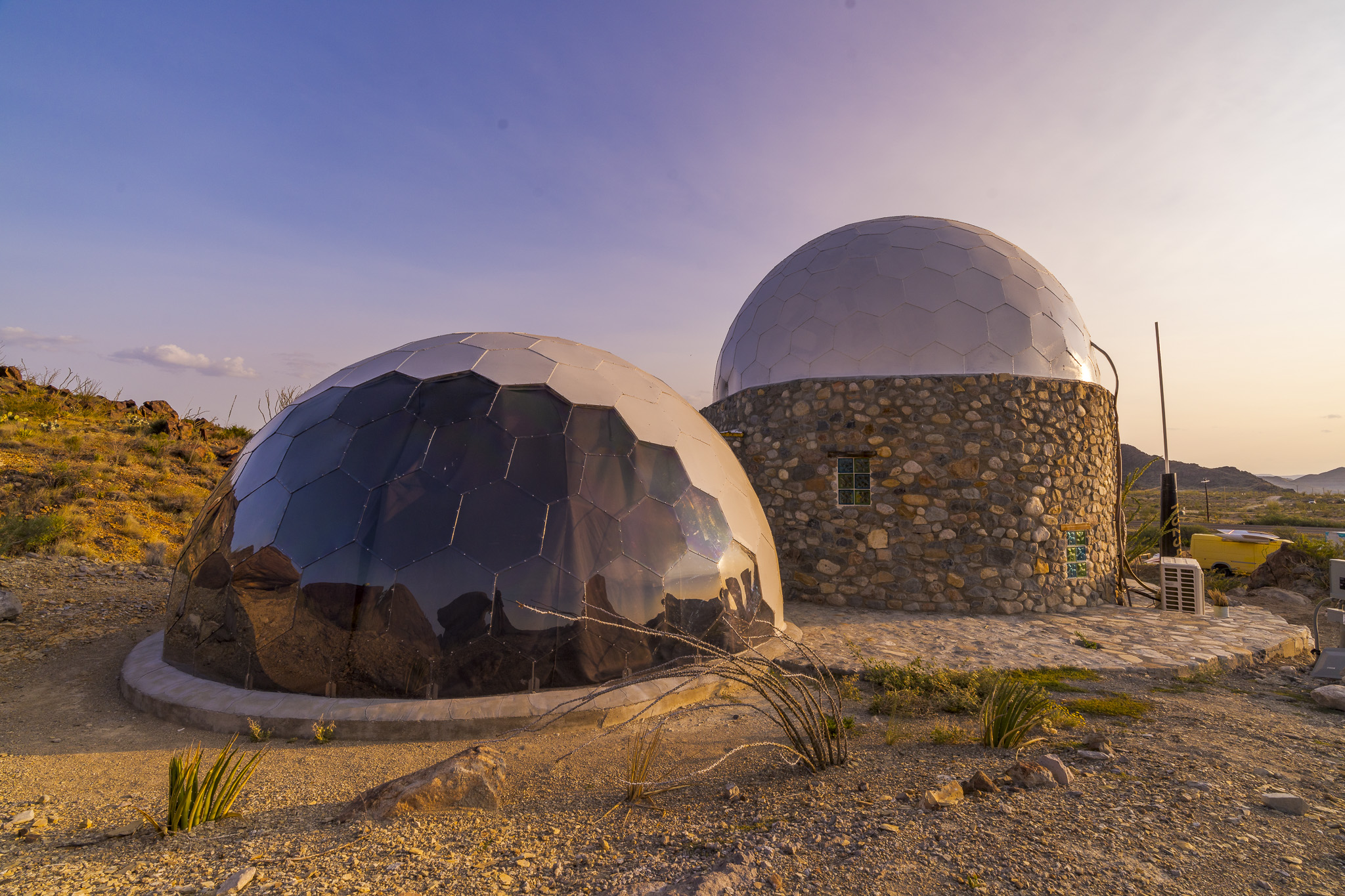
Space Cowboys is part desert basecamp, part glamping retreat and part intergalactic playground. Its hard-shell dome pods sit along a volcanic desert hill with sweeping views of the Big Bend landscape and the enormous sky above it.
The property is playful and unexpected, with reclining airline seats, galaxy-inspired lighting, alien trails and plenty of space to sit outside and watch the stars. The pods also offer the comforts you appreciate after a long day in the desert, including powerful air conditioning, which is no small thing in Terlingua in August.
I worked with Slava and Dante to photograph the property and its individual domes, beginning in the daylight and continuing through golden hour and into the night.
During the day, the landscape is rugged, bright and seemingly endless. As evening arrives, everything changes. The heat begins to ease. The desert takes on softer colors. Then darkness settles over the property and “Space Cowboys” really comes alive.
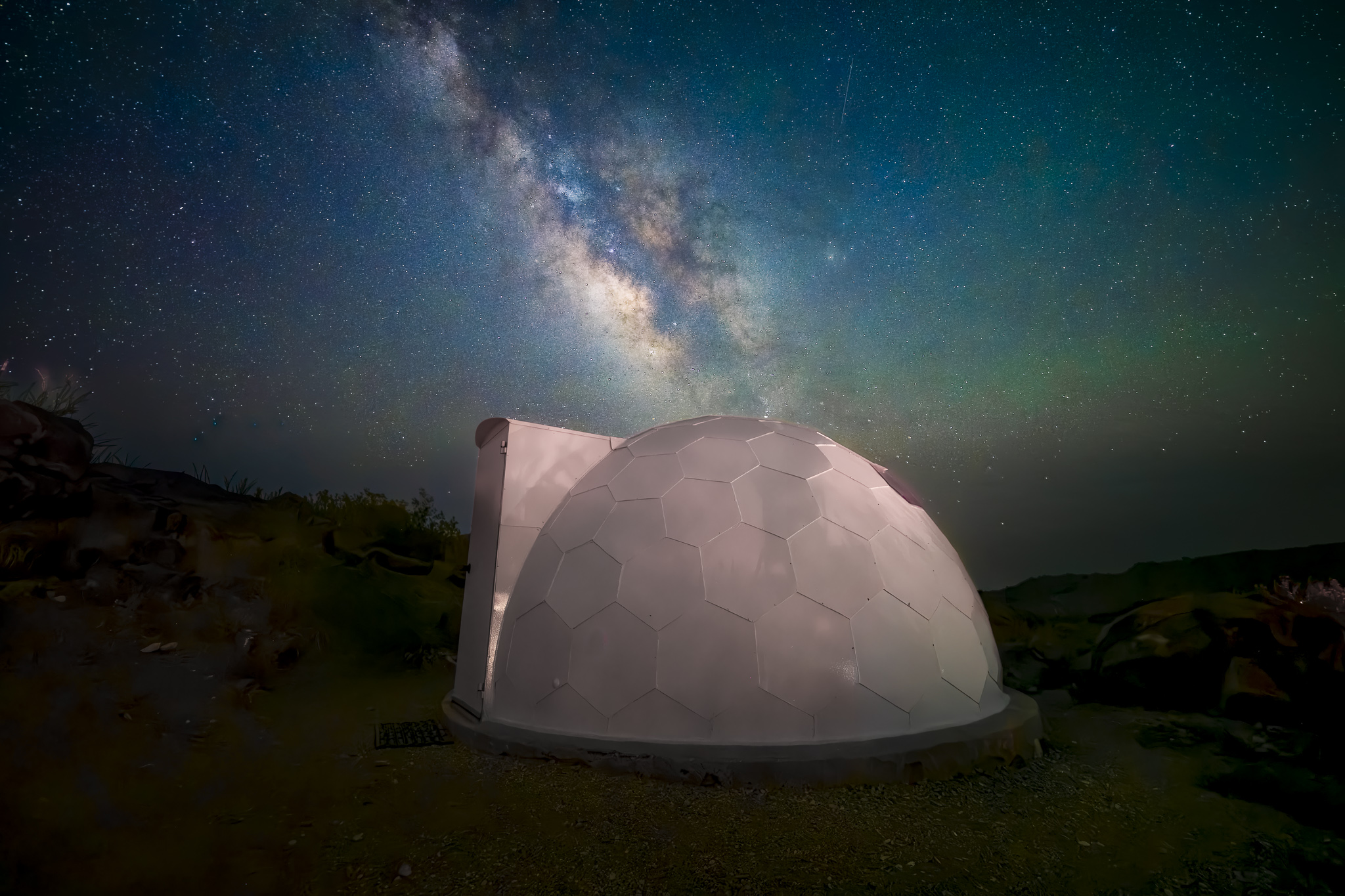
With very little artificial light competing with the sky, the Milky Way is clearly visible overhead. The domes, desert terrain and space-inspired details gave me endless possibilities for creating photographs that felt both grounded in the Chihuahuan Desert and just a little otherworldly.
It was a fun shoot, a memorable stay and an easy place to understand once you have experienced a Terlingua night beneath the stars.
Scouting Big Bend in the August Heat
From Terlingua, Gina and I headed into Big Bend National Park for a fast two-day, one-night scouting trip.
I had already spent a great deal of time researching potential locations for the November workshop. Planning apps, maps and photographs can tell you a lot, but they cannot show you everything. There is no substitute for standing in a location, watching how the light moves across it, checking sightlines and understanding the practical realities of bringing a small group there.
This visit gave us a chance to look more closely at travel times, access and possible shooting locations. It also gave me time to explore without the pressure of leading a group, to slow down, watch and make a few new photographs.
It was hot. Very, very hot.
Temperatures around Terlingua and in the lower elevations climbed to roughly 105 to 110 degrees. Even in the Chisos Mountains, temperatures reached well into the 90s.
In that kind of heat, you do not rush. You carry more water than you think you will need, plan carefully and learn to work with the desert instead of trying to overpower it.
Yet the beauty never lets up.
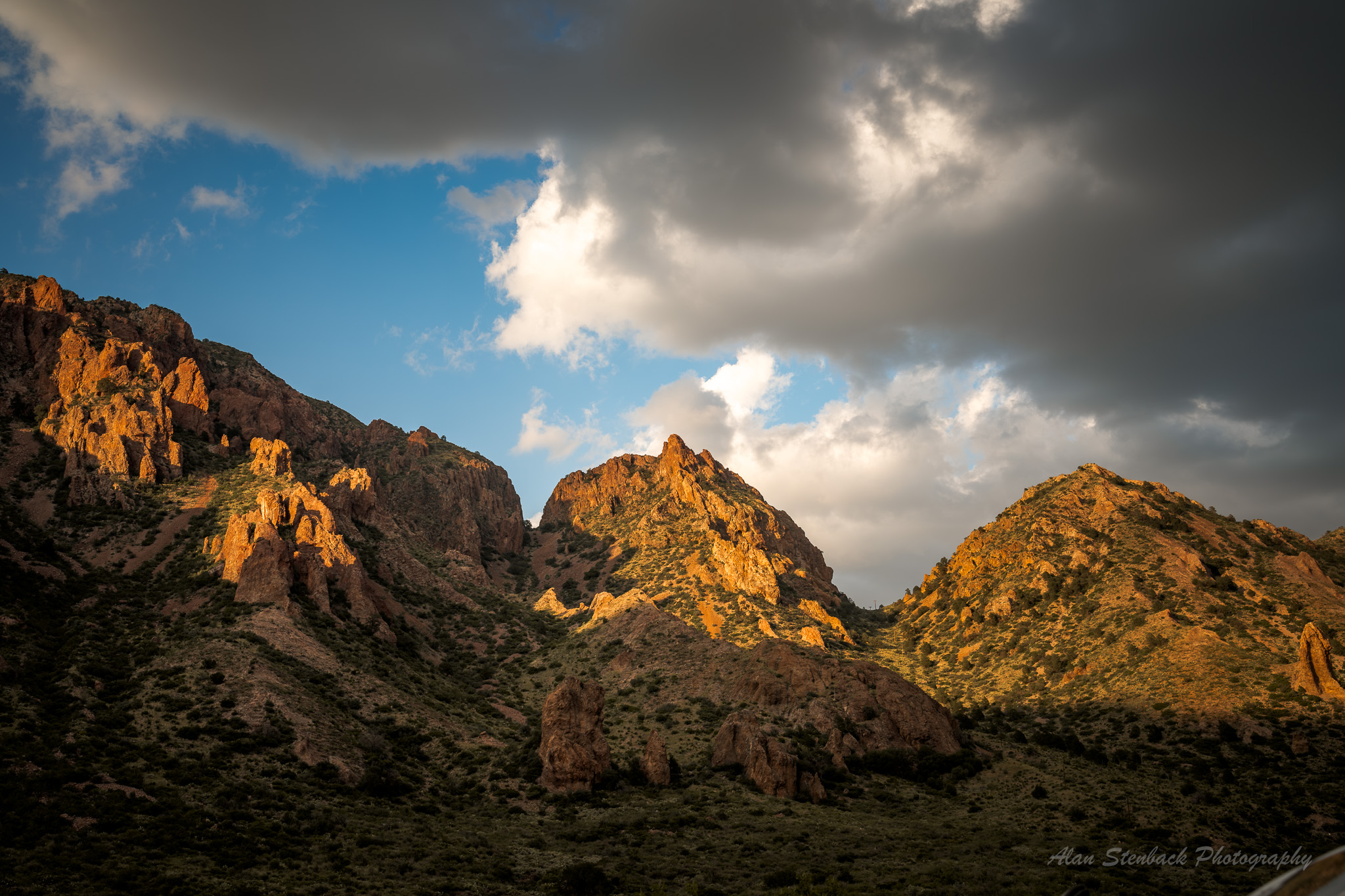
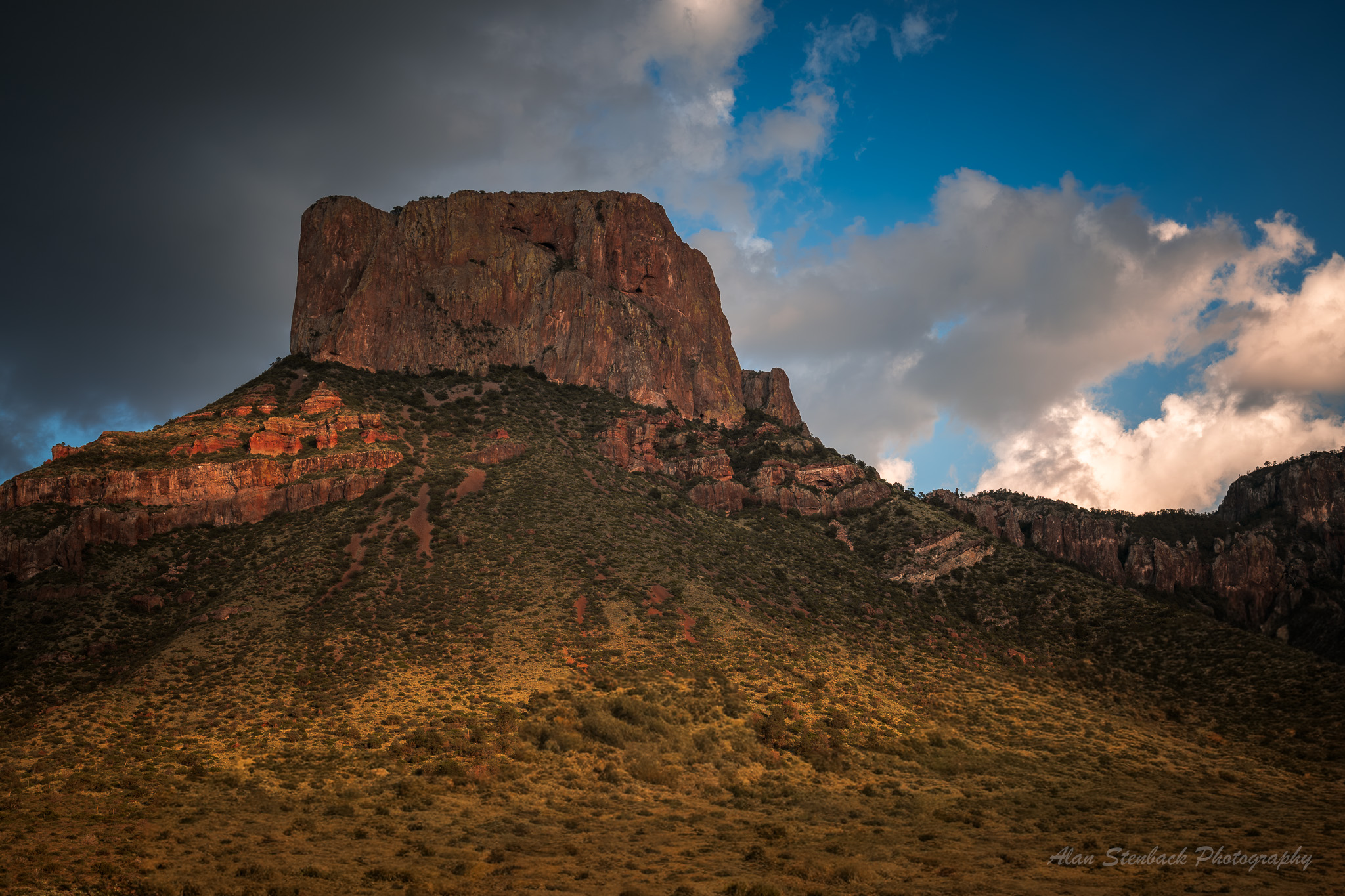
The sun remains out in all its glory until close to 8 p.m., when it finally begins to caress instead of whip you. Then the entire landscape changes. The Chihuahuan Desert takes on layers of gold, rust, rose and violet. Mountains that appeared harsh and distant an hour earlier begin to glow.
Desert light is always a spectacle in Big Bend.
Shortly after, the stars come out to play.
The astrophotography party here is like no other. With so little artificial light competing with the sky, the Milky Way becomes part of the landscape rather than something separate from it. The darkness has depth. The silence feels bigger.
I have photographed the night sky many times, but Big Bend has a way of making me stop and look up all over again.
A Challenging Night in the Chisos
Our night camping in the Chisos Mountains was not the easiest night we have had.
The Chisos are beautiful and have so much to offer, and I will not dwell on the particulars of this visit. Let’s just say that this time, the mountains were not especially kind to us.
That is sometimes part of working outdoors. Not every trip unfolds smoothly, and not every location welcomes you in quite the same way. You adapt. You pay attention. You take what the landscape gives you.
Still, beauty called. Majestic night skies waited. I was there for all of it, camera ready.
Despite the heat and the challenges, it felt like another magical visit to the Chihuahuan Desert. Except for what we witnessed near Santa Elena Canyon.
The Day Everything Began to Change
On August 6, Gina and I drove to the Santa Elena Canyon viewpoint.
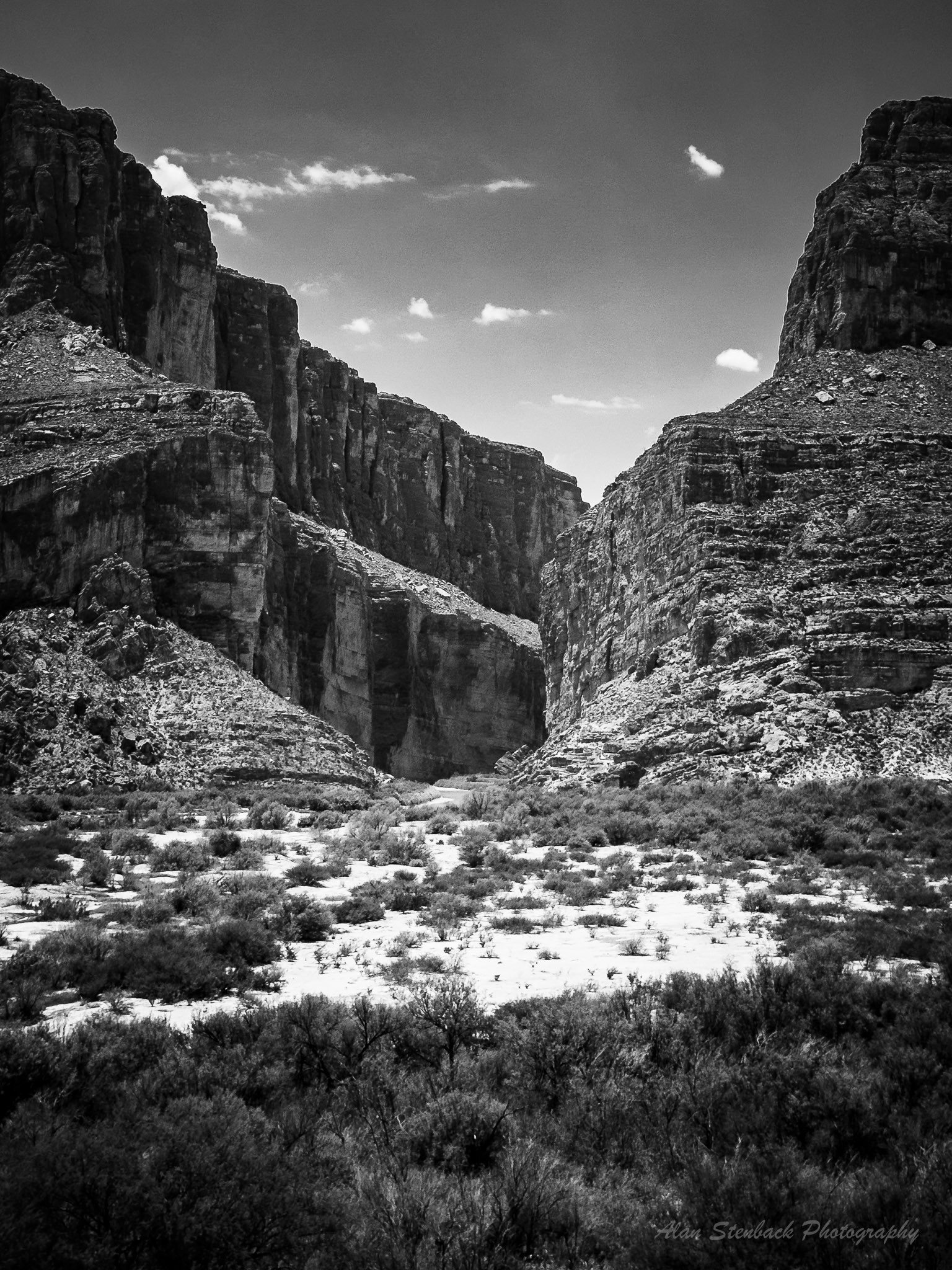
Santa Elena is one of the defining landscapes of Big Bend. The limestone walls rise dramatically above the Rio Grande, with the river carving its course between the United States and Mexico. Standing before it, the canyon feels immense, quiet and timeless.
That same day, contractors began clearing land near Santa Elena Canyon for a new patrol road connected to a larger border infrastructure project. Current plans also include detection technology and sections of vehicle barriers along the Rio Grande. What has often been described as a partial wall.
We had arrived on the day the first ground was being broken for a project that, to us, felt both unthinkable and entirely uncalled for.
The black-and-white photograph accompanying this story does not show the machinery. It shows Santa Elena Canyon and the wide expanse of desert and river corridor in front of it. The very land now being cleared.
Federal activity was already heavy that day, and we did not stay long. The midday light was harsh, so I chose to process the image in black and white. At the time, I thought I was simply photographing one of Big Bend’s most iconic landscapes. I did not yet understand that the image would become a record of that land at the moment everything began to change. I did not yet understand how much weight it would carry.
In the days that followed, the construction became national news. Although we had been there at its very beginning, it remains heart-wrenchingly difficult to comprehend what is being done to that land.
Big Bend is one of the most remote and ecologically significant landscapes in this country. The Rio Grande, the desert, the canyons, the plants and the wildlife do not exist as separate pieces. They form one interconnected place, one that has remained wild, serene and remarkably untouched for generations.
Cutting roads through that landscape and clearing native vegetation along the river will leave consequences for nature and wildlife for many years to come. Damage like this cannot simply be undone when the machinery leaves.
I am deeply saddened by it. I am angry. And yes, I am disgusted that this destruction is being carried out inside a national park whose land is supposed to be protected.
The photograph of Santa Elena Canyon does not document the machinery. Instead, it holds the stillness and beauty of that landscape on the day the destruction began.
Visitors planning a trip should check the National Park Service alerts and conditions page for current construction-related closures and access updates.
Why We Will Keep Returning
This trip gave me new photographs, a deeper understanding of the park and a clearer vision for our November workshop. It also reminded me that access to places like Big Bend should never be taken for granted.
Gina and I will always cherish that we were able to witness and photograph the raw, untouched beauty of this landscape. We will continue sharing it through the images and stories we bring home.
And we will be back.
We will continue bringing people and light to this untamed, beautiful place. Thoughtfully, with a small footprint and with deep respect for the land. In November, I look forward to helping a small group of photographers experience the changing desert light, the vast landscapes and a night sky unlike almost anywhere else.
Because photographs can do more than show what a place looks like.
They can preserve how it once felt. They can bear witness to what is changing. And sometimes, they can remind us why a place is worth protecting.
Learn more about the Big Bend Landscape & Astro Photography Workshop here.
Clear skies,
Alan Stenback